

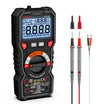
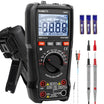

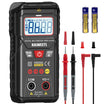
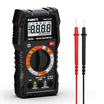

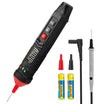


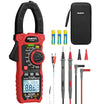
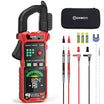
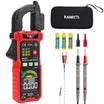
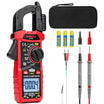

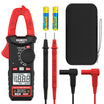
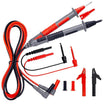


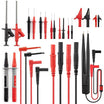
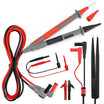

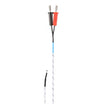
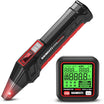
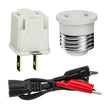

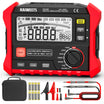
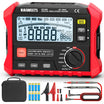

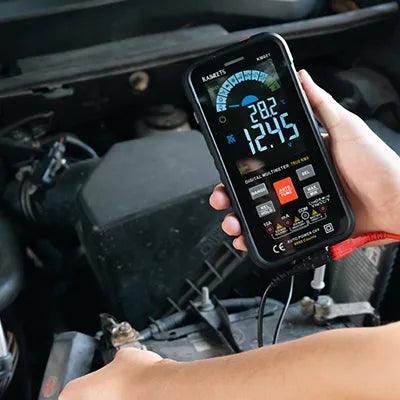
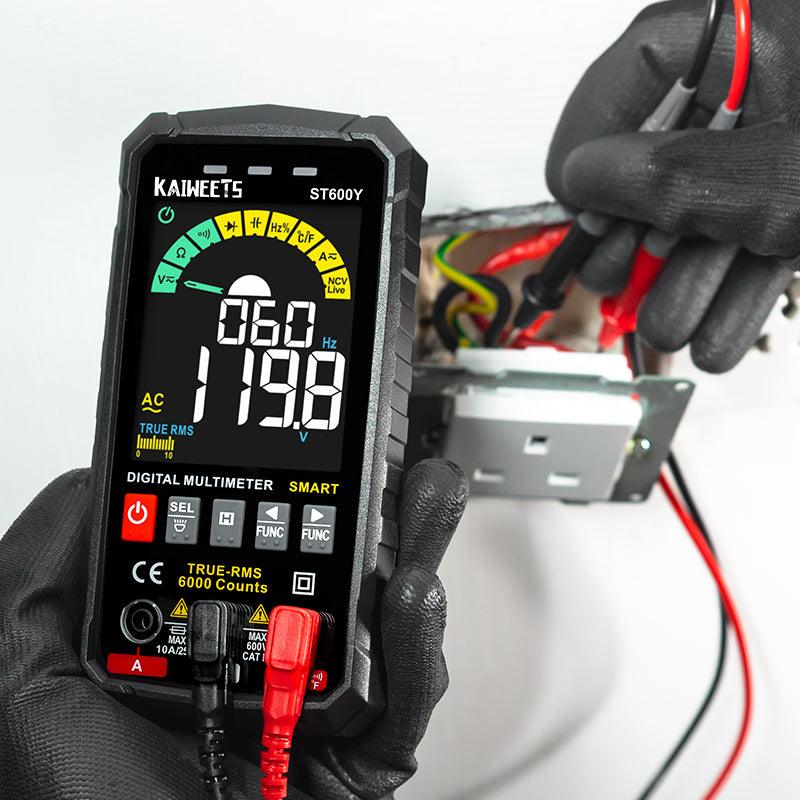
Multimeter leads may look simple, but they are part of the complete measuring system. Many modern digital multimeters use similar 4 mm safety banana plugs, so a lot of leads can physically fit different meters. That does not mean every lead is safe for every job.
The right test leads should match your multimeter, the measurement category, the voltage level, and the type of contact you need. If you are working on live household or electrical panel circuits, lead safety matters as much as the meter itself.
Are Multimeter Leads Universal?
Most multimeter leads are only universal in the sense that many digital multimeters accept the same general plug style. The common connector on modern handheld meters is usually a shrouded 4 mm banana plug, which lets many standard leads fit many standard meters.

Compatibility should never be judged by fit alone. A lead can plug into a meter and still be wrong for the job if its CAT rating, voltage rating, current rating, or insulation quality is too low.
There are also exceptions. Some older meters, compact meters, specialty meters, and bench instruments may use different sockets. Some accessories may only fit certain probe handles or brands. Before buying replacement leads, check the meter jack type and the ratings printed on both the meter and the leads.

What Common Multimeter Lead and Probe Types Are Available?
Multimeter leads come in several common styles, and each one is designed for a different kind of contact point. You do not need every probe type for basic testing, but the right accessory can make a measurement easier and safer.
Many multimeter accessories, including clips, hook probes, and specialty tips, are useful only when they match your meter and the circuit you are testing.

Standard test probes
Standard test probes are the most common choice for general multimeter use. They work well for checking outlets, terminals, batteries, and many everyday test points.
Needle-tip probes
Needle-tip probes are thin probes used for small terminals or tight spaces. They are helpful when a standard probe tip is too large to make clean contact.
Alligator clips
Alligator clips grip onto wires or screw terminals, which makes hands-free testing easier. Use insulated clips when working near live circuits.
Hook test clips
Hook test clips use a small spring hook to hold onto wires, pins, or component legs. They are useful for low-voltage electronics where the test point is small.
Tweezer probes
Tweezer probes are designed for tiny electronic components, especially surface-mount parts. They are not a general replacement for standard electrical test probes.
Temperature probes
A temperature probe is used with a compatible multimeter to measure temperature. It only works if the meter supports temperature measurement and the probe type matches the meter.
What Should Match Before You Buy or Use Replacement Multimeter Leads?
Replacement multimeter leads should match your meter, your measurement environment, and the type of contact you need to make. A lead that fits the jack is not always safe for the job.
Plug compatibility
Check the plug style before buying replacement leads. Many handheld digital multimeters use shrouded 4 mm banana plugs, but some meters use different sockets or recessed input designs.
The plug should fit firmly into the meter jack. If it feels loose or leaves exposed metal near the input, do not use it.
CAT and voltage rating
The lead rating should match the environment where you are measuring. Look for a clear marking such as CAT III 1000 V or CAT IV 600 V.
Do not rely on a vague “CAT rated” label. The category and voltage rating should both be shown clearly.
Current rating
If you plan to measure current, check the current rating of the leads and accessories. Current testing places more demand on the leads than voltage testing.
Small clips, hook probes, or light-duty accessories should not be used for high-current measurements unless the manufacturer clearly rates them for that use.
Insulation and lead material
Good leads should have intact insulation and secure strain relief near the probe handle and plug. Silicone leads are often more flexible than basic PVC leads, which makes them easier to use in tight spaces.
Replace the leads if the insulation is cracked, cut, stiff, melted, or separated from the handle.
Probe tip and accessory type
Choose the probe style based on the test point. Standard probes work for general testing, while insulated alligator clips are useful when you need a hands-free connection.
For small electronics, needle-tip probes or hook clips may be easier to control. For live electrical work, avoid using accessories that are not properly rated.
Lead length
Longer leads give you more reach, but they can also get in the way. Shorter leads are easier to control when working inside a compact area.
Choose a length that lets you reach the test point without pulling on the probe or leaving the meter in an unstable position.

How Do You Check Multimeter Leads Before Use?
You should inspect and test your multimeter leads before using them, especially before measuring live voltage. A quick check can prevent unstable readings and avoid unsafe contact.
Step 1: Inspect the insulation
Look along the full length of both leads. Do not use them if you see cuts, cracks, melted spots, exposed wire, or loose strain relief near the plug or probe handle.
Step 2: Check the probe tips and plugs
The tips should be straight, clean, and secure. The banana plugs should fit tightly into the multimeter jacks without wobbling.
Step 3: Test lead resistance
Set the meter to resistance mode and touch the two probe tips together. A good set of leads should show very low resistance.
If the reading jumps around, wiggle each lead gently near the probe and plug ends. An unstable reading usually means the lead is damaged internally.
Step 4: Confirm the correct jacks before measuring
Before measuring voltage, resistance, or current, make sure the red and black leads are plugged into the correct inputs. This is especially important after using the current jack.
Never use resistance or continuity mode on a live circuit. Turn power off before checking continuity, fuses, or resistance.
When Should You Replace Multimeter Leads?
You should replace multimeter leads when they are damaged, underrated, loose, or no longer reliable. Do not keep using a lead set just because the meter still turns on.
- Replace leads with cracked, cut, or hardened insulation.
- Replace leads if the plug or probe handle feels loose.
- Replace leads that give unstable resistance readings during a wiggle test.
- Replace leads with unclear or missing safety ratings.
- Upgrade the leads if your work involves higher-energy circuits than before.
If you only work on low-voltage electronics, your needs may be different from someone testing building wiring. Still, the leads should be in good condition and suitable for the circuit.

Frequently Asked Questions
What happens if you swap the multimeter leads when measuring voltage?
On a digital multimeter, swapping the red and black leads during a DC voltage test usually reverses the polarity sign. The reading may show a negative value instead of a positive value.
For AC voltage, polarity is not usually displayed the same way. You should still keep the black lead in COM and the red lead in the correct input for the measurement.
Do multimeter leads matter?
Yes, multimeter leads matter for both safety and accuracy. Poor leads can create unstable contact, add unwanted resistance, or expose the user to electrical hazards.
The lead set should match the meter and the environment where the measurement is taken.
What are the leads on a multimeter called?
They are commonly called test leads, meter leads, probes, or probe leads. In everyday use, people often use these terms interchangeably.
More precisely, the lead is the cable assembly, while the probe is the hand-held tip used to contact the circuit.
Which probes are used with multimeters?
The most common probes are pointed probes, alligator clips, and hook clips. Pointed probes are used for general testing, while clips are useful when you need a more stable connection.
Specialty probes are also available for temperature, small electronics, and tight test points.
Are multimeter leads interchangeable?
Many multimeter leads are interchangeable if they use the same plug style and have the correct ratings. However, not all leads are compatible with all meters or all measurement environments.
Always check plug fit, CAT rating, voltage rating, and current rating before using replacement leads.
What is the difference between a meter lead and a probe?
A meter lead is the cable that connects the multimeter to the test point. A probe is the part you hold or attach to make contact with the circuit.
Many replacement sets combine the cable, plug, handle, and tip into one complete test lead assembly.
Can I use cheap multimeter leads?
Cheap leads may be acceptable for simple low-voltage hobby work if they are in good condition. They are not a good choice for live mains, electrical panels, or higher-energy circuits.
For electrical work, use leads with clear safety markings and proper insulation.
Conclusion
Multimeter leads are not fully universal. Many modern leads share a common plug style, but safe use depends on more than whether the plug fits.
Before using replacement leads, check the connector, safety rating, voltage rating, current rating, and physical condition. If a manufacturer specifies a particular lead set for a meter or accessory, follow that guidance.
The safest approach is simple: treat the meter and leads as one system. A reliable multimeter still needs reliable leads to give safe and accurate measurements.
Dig deeper:

Leave a comment
All comments are moderated before being published.
This site is protected by hCaptcha and the hCaptcha Privacy Policy and Terms of Service apply.