

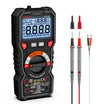
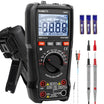


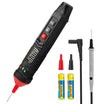


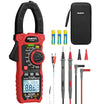
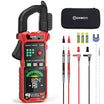
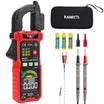
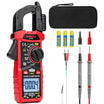





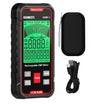
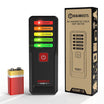

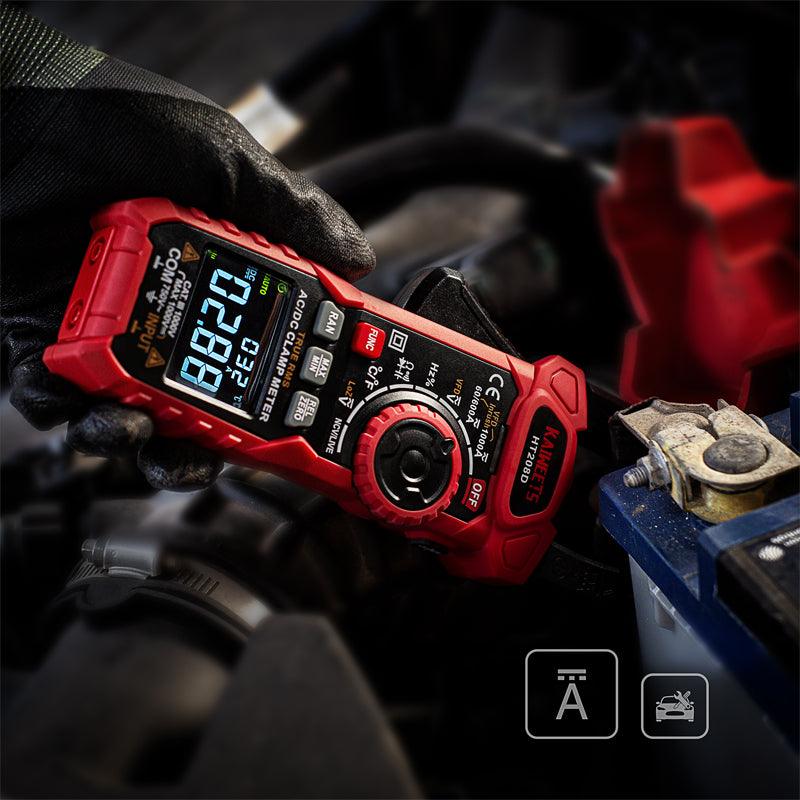
A clamp meter is an electrical tester that measures current by clamping around a conductor. Unlike a standard multimeter, it does not need to be connected in series with the circuit to measure amps.
This makes a clamp meter useful when you need to check current without disconnecting a wire. It is commonly used for troubleshooting electrical loads, checking current draw, and comparing whether a circuit is carrying the expected amount of current.

The most important rule is simple: clamp around one conductor only. If you clamp around both the positive and negative wires in a DC circuit, the magnetic fields can cancel each other out and the reading may be close to zero.
How does a clamp meter measure current?
A clamp meter measures current by sensing the magnetic field created when electricity flows through a conductor. The stronger the current, the stronger the magnetic field around that conductor.
For AC current, many clamp meters use a current transformer design. For DC current, the meter must support DC amps and usually relies on Hall effect sensing. That is why not every clamp meter can measure DC current.
The clamp jaws must close fully around the conductor. If the jaw is not closed, the conductor is off-center, or the wrong range is selected, the reading may be unstable or inaccurate.
Can every clamp meter measure DC amps?
No, a clamp meter must specifically support DC current measurement to measure DC amps. Many basic clamp meters only measure AC current through the clamp.
Before measuring a battery circuit, solar circuit, automotive circuit, or other DC load, check the meter dial and manual. Look for markings such as DC A, A⎓, or AC/DC current.
If the clamp meter only lists AC A, it should not be used for DC amp measurement through the clamp. It may still measure DC voltage with test leads, but that is a different function.
How do you use a clamp meter to measure DC amps?
To measure DC amps with a clamp meter, select the DC current range, zero the meter, clamp around one conductor, and read the current while the circuit is operating.
Measuring current usually requires the load to be on. If you are not qualified to work near the circuit, do not open panels or expose live parts. Follow the meter manual and use a meter with the correct CAT and voltage rating for the environment.
Step 1: Set the meter to DC amps
Turn the dial to the DC current setting. On many meters, this may be marked as A⎓ or DC A.
If your clamp meter has range options, choose a range higher than the current you expect. If you are not sure, start with the highest range and move lower only when it is safe to do so.
Step 2: Zero the clamp meter
Use the zero, relative, or reset button before clamping around the conductor. This is especially important for DC current measurement.
DC clamp readings can drift because the sensor may pick up a small offset. Zeroing the meter helps remove that offset before you take the real reading.
Step 3: Clamp around one conductor only
Open the jaws and place only one wire inside the clamp. The conductor should sit near the center of the jaw opening.
Do not clamp around the whole cable if it contains both the supply and return conductors. In a DC circuit, that usually means you should clamp either the positive wire or the negative wire, not both together.

Step 4: Turn on the load and read the current
Turn on the device or circuit being tested, then read the current on the display. The value shown is the DC current flowing through that conductor.
If the reading is negative, the clamp may be facing the opposite direction of current flow. Reverse the clamp direction or use the sign to understand polarity.
Step 5: Repeat the measurement if needed
Repeat the test on another single conductor only if you need to compare current in different parts of the circuit. Make sure each reading is taken under the same load condition.
For example, a motor may draw more current during startup than during normal running. If your meter has an inrush function, use it when startup current is the value you need.
What mistakes cause inaccurate DC amp readings?
Most bad DC amp readings come from clamping the wrong wires, using an AC-only meter, or forgetting to zero the clamp before measuring.
- Clamping around two wires: The magnetic fields can cancel each other out, so the meter may show little or no current.
- Using an AC-only clamp meter: An AC-only clamp meter cannot measure DC amps through the clamp.
- Skipping the zero function: DC readings may show an offset if the meter is not zeroed first.
- Leaving the jaw partly open: The clamp must close fully for a stable reading.
- Exceeding the meter rating: Do not measure current, voltage, or circuits beyond the meter’s stated limits.
What features should a clamp meter have?
The best clamp meter is the one that matches the current type, current range, and safety environment you need to measure.
For DC amp measurement, start by checking whether the clamp can measure DC current. Then check the maximum current range, jaw size, and safety rating.
| Feature | Why it matters |
|---|---|
| AC/DC current measurement | Needed if you want one meter for both AC loads and DC circuits. |
| True RMS | Helps improve AC readings when the waveform is not a clean sine wave. |
| Zero or relative mode | Useful for clearing DC sensor offset before measuring amps. |
| Jaw size | The jaw must fit around the conductor you want to measure. |
| CAT and voltage rating | The meter must be rated for the electrical environment where it is used. |
| Backlit display | Makes readings easier to see in panels, garages, and low-light areas. |
| Inrush current | Helpful when checking startup current on motors and similar loads. |
If you need higher current ranges or inrush testing, compare the specifications before choosing a model.
If you also need to measure voltage, resistance, or continuity with test leads, read this guide on how to use a multimeter.
Frequently Asked Questions
Do all clamp meters measure both AC and DC?
No, not all clamp meters measure both AC and DC through the clamp. Some clamp meters are AC-only, while AC/DC models can measure both types of current.
Why does my clamp meter show zero amps?
A zero reading often means the meter is clamped around both conductors, the load is off, or the meter does not support DC current. Check one issue at a time before assuming the circuit has no current.
Can I measure DC amps without cutting the wire?
Yes, a DC-capable clamp meter can measure DC amps without cutting the wire. You still need access to a single conductor so the clamp can surround only that wire.
How accurate are clamp meters?
Clamp meter accuracy depends on the model, range, sensor design, and how the measurement is taken. For the best result, use the correct range, center the conductor in the jaw, and follow the accuracy specifications in the manual.
Can a clamp meter replace a multimeter?
A clamp meter can replace a multimeter for some tasks, but not all of them. It is best for current measurement, while a multimeter is often better for detailed voltage, resistance, diode, and continuity checks.
Conclusion
Using a clamp meter to measure DC amps is straightforward once you understand the key rule: clamp one conductor only. The meter must support DC current, the jaw must close fully, and the circuit must be operating under the load condition you want to test.
Before working near energized equipment, check the meter’s rating and your own skill level. If the test requires opening a live panel or exposing conductors, leave the work to a qualified person.


1 comment
Umberto Nalon
2022-nov-09
Clampmeter in direct current: it is necessary to zero the instrument before making the measurement with the appropriate “Zero” key, as is done for capacitors with the “Relative” key. Then it is not good to move the instrument until the end of the measurement. The reason is the terrestrial magnetism that visibly moves the needle of a compass and invisibly acts on the very sensitive magnetic circuit for detecting direct current. The introduced error can reach 1 Ampere. Alternating current clearly does not suffer from this specific problem.
I don’t know if the procedure described above applies to Kaiweets products, or if they have a technology that avoids it (this procedure).
Currently all my clampmeters implement this procedure to minimize errors.
Leave a comment
All comments are moderated before being published.
This site is protected by hCaptcha and the hCaptcha Privacy Policy and Terms of Service apply.