
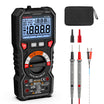
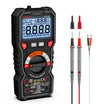
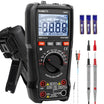

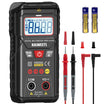
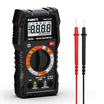



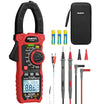
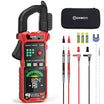
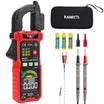
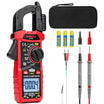

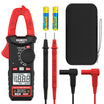



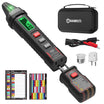
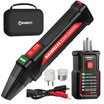

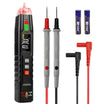


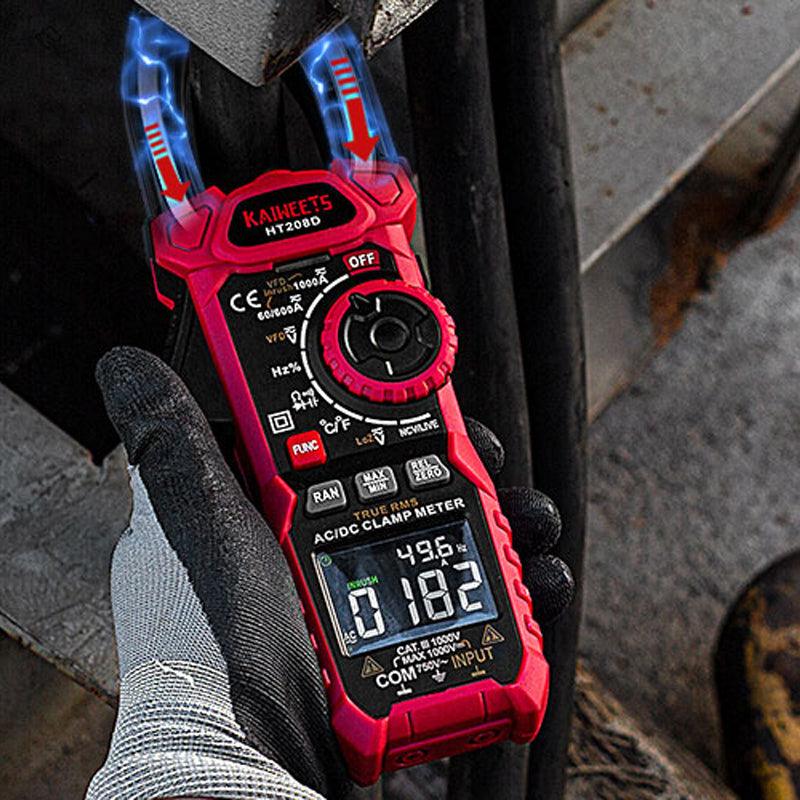
A clamp meter is an electrical test instrument designed primarily to measure current without disconnecting the conductor. Its hinged jaws close around a single wire and detect the magnetic field created by the current flowing through it.
Many modern clamp meters also measure voltage, resistance, and continuity through test leads. However, their main advantage remains quick, non-intrusive current measurement in operating electrical systems.
This guide explains how clamp meters work, what they can measure, the main types available, and what to consider when choosing one.

How Does a Clamp Meter Work?
A clamp meter measures current by sensing the magnetic field around a current-carrying conductor. The meter converts that magnetic field into an amperage reading shown on its display.
The jaws do not normally need to make electrical contact with the conductor. Instead, they close around the insulated wire while current continues to flow through the circuit.
This is different from measuring current with a standard multimeter. A multimeter usually has to be connected in series, which requires the circuit to be opened so the current can pass through the meter.
How do AC clamp meters detect current?
Many AC clamp meters use a current transformer inside the jaws. Alternating current creates a changing magnetic field, which induces a proportional signal inside the meter.
This design works well for measuring AC current but cannot measure steady DC current through the jaws.
How do AC/DC clamp meters work?
An AC/DC clamp meter commonly uses a magnetic sensor that can respond to both alternating and direct current. This allows it to measure current in battery-powered and automotive systems as well as standard AC circuits.
DC-capable clamp meters usually include a zero function. This compensates for sensor offset and nearby magnetic fields before the measurement is taken.
Why must the clamp surround one conductor?
The jaws should normally surround only one current-carrying conductor. If the outgoing and returning conductors are clamped together, their magnetic fields can cancel each other.
For example, placing the jaws around an entire two-conductor power cord may produce a reading close to zero even though the appliance is operating normally.
To measure appliance current safely, use a suitable line splitter or another approved method that separates the conductors. Do not cut or remove insulation simply to create access for the clamp.
What Can a Clamp Meter Measure?
A clamp meter always measures current through its jaws, but additional functions depend on the specific model.
| Measurement | How It Is Measured | Availability |
|---|---|---|
| AC current | Through the clamp jaws | Standard on most clamp meters |
| DC current | Through compatible clamp jaws | Only on AC/DC models |
| AC/DC voltage | Through test leads | Common on digital models |
| Resistance | Through test leads | Common on digital models |
| Continuity | Through test leads | Common on digital models |
| Capacitance | Through test leads | Model-dependent |
| Frequency | Through the jaws or test leads | Model-dependent |
| Temperature | With a compatible temperature probe | Model-dependent |
A long list of functions does not necessarily make one clamp meter better than another. The measurement range, resolution, and accuracy are often more important than the number of modes.
What Are the Main Types of Clamp Meters?
Clamp meters are best classified by the type and range of current they are designed to measure.
AC clamp meters
AC clamp meters measure alternating current through their jaws. They are commonly used for household circuits and other AC-powered equipment.
An AC-only model cannot measure DC current through the clamp, even if it can measure DC voltage through its test leads.
AC/DC clamp meters
AC/DC clamp meters measure both alternating and direct current through the jaws. They are useful for automotive testing and battery-powered equipment.
These meters are usually more versatile than AC-only models. However, their low-current performance still depends on the specified range and resolution.
Leakage current clamp meters
Leakage clamp meters are designed to detect much smaller currents than general-purpose load-current meters. They may be used to investigate unintended current flowing to ground.
A standard clamp meter designed for hundreds of amps may not provide enough resolution for this type of test.
Flexible clamp meters
Flexible clamp meters use a flexible current-sensing loop instead of rigid jaws. The loop can fit around large conductors or reach into crowded electrical panels.
Flexible sensors are commonly intended for AC measurement. The supported current type should always be confirmed in the product specifications.
What Are the Main Parts of a Clamp Meter?
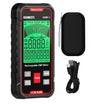
A digital clamp meter combines a current-sensing jaw with controls and test-lead inputs for additional electrical measurements.
- Clamp jaws: Surround the conductor and direct its magnetic field to the sensor.
- Jaw trigger: Opens and closes the clamp jaws.
- Display: Shows the measured value and selected unit.
- Function dial: Selects current, voltage, resistance, or another mode.
- Control buttons: Operate functions such as data hold or zero adjustment.
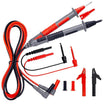
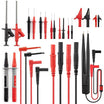
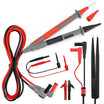
- Input terminals: Connect test leads for contact measurements.
- Tactile barrier: Indicates where the user should keep their fingers during testing.
Some models also include a built-in flashlight or backlit display. These features improve visibility but do not replace proper lighting or safe working practices.
What Is a Clamp Meter Used For?
A clamp meter is mainly used to check how much current an operating circuit or piece of equipment is drawing.
Checking equipment load current
A clamp meter can measure the current drawn by a running appliance or machine. The result can be compared with the equipment’s rating or expected operating condition.
An unusually high or low reading does not identify the fault by itself. It provides useful evidence for further testing.
Testing motors and HVAC equipment
Technicians use clamp meters to check motor and compressor running current. Some meters also include an inrush function for capturing the brief current surge during startup.
Current readings are often evaluated together with voltage measurements. A current problem may be caused by the equipment itself or by the electrical supply.
Comparing current between conductors
A clamp meter can compare current on separate phases or branch circuits. Significant differences may indicate an imbalance or abnormal load condition.
Testing inside energized distribution equipment should be performed only by people who are qualified for the electrical hazard involved.
Checking automotive current draw
An AC/DC clamp meter can measure current in some automotive circuits without disconnecting the cable. This is useful when checking accessory current or battery drain.
Parasitic-drain testing may involve very small current. The clamp meter must have enough low-current resolution for the expected value.
What Are the Advantages of a Clamp Meter?
The main advantage of a clamp meter is that it can measure current without inserting the meter into the circuit.
- Non-intrusive current measurement: The conductor normally remains connected and operating.
- Convenient high-current testing: Current does not pass through a fused meter input.
- Faster repeated checks: The jaws can be moved between accessible conductors.
- Additional test functions: Many models also measure voltage and resistance.
This measurement method can reduce some setup risks, but it does not make every electrical task safe. The user may still be working near exposed energized parts.
What Are the Limitations of a Clamp Meter?
A clamp meter is convenient, but it may not be the best tool for every current measurement.
Limited low-current resolution
A general-purpose clamp meter may struggle to display very small current changes. A multimeter connected in series or a dedicated leakage clamp may provide better resolution.
The conductor must be accessible
The jaws must fit around one conductor. Measuring a standard power cord can be difficult because the outgoing and returning wires are enclosed together.
Jaw position can affect the reading
The jaws must close completely around the conductor. Dirt, physical damage, or a gap between the jaw tips can affect measurement accuracy.
Keeping the conductor near the center of the jaws may also improve reading consistency.
Not every model measures DC current
Many basic clamp meters measure only AC current through the jaws. Users who work with batteries or automotive systems should select an AC/DC model.
How Do You Use a Clamp Meter?
To use a clamp meter, select the correct current mode and close the jaws around one conductor. The exact procedure depends on whether you are measuring AC or DC current.
- Inspect the meter and confirm that its ratings are suitable for the circuit.
- Select AC or DC current according to the system being tested.
- Choose an appropriate range if the meter is manual-ranging.
- Zero the meter before a DC current test if required.
- Place the jaws around one insulated conductor.
- Close the jaws completely and wait for the reading to stabilize.

This is only a general overview. For a complete operating procedure and common measurement errors, see how to measure amps with a clamp meter.
How Do You Choose a Clamp Meter?
Choose a clamp meter based on the current type, expected measurement range, conductor size, and electrical environment.
AC or AC/DC current
An AC-only meter may be sufficient for basic household and building electrical work. Automotive or battery-system testing normally requires an AC/DC clamp meter.
Current range and resolution
The meter’s current range must cover the highest expected load. Its resolution should also be fine enough for the smallest current you need to observe.
A meter that can measure hundreds of amps may still be unsuitable for detecting a few milliamps.
Jaw opening
The jaws must fit around the largest conductor you plan to test. A compact jaw is easier to position in crowded spaces, while a larger jaw accommodates thicker conductors.
Accuracy specification
Accuracy is normally stated as a percentage of the reading with an additional number of display counts. Compare specifications within the current range you expect to use.
True RMS measurement
A True RMS clamp meter is useful when measuring distorted AC waveforms. These waveforms are common in equipment controlled by electronic drives or switching power supplies.
A basic averaging meter may provide acceptable readings on a clean sine wave but can be less reliable on non-sinusoidal signals.
Safety category
The meter and its test leads must have an appropriate measurement category and voltage rating for the installation. CAT ratings describe the transient-energy environment rather than measurement accuracy.
A higher voltage number alone does not mean the instrument is suitable for every location in an electrical system.
Useful additional functions
Data hold can make a reading easier to view after the clamp is removed. An inrush mode is useful for equipment with high starting current.
Other functions should be selected according to the work you actually perform rather than the length of the feature list.
Explore the available KAIWEETS clamp meters and compare their current type, range, jaw size, and test functions.
How Do You Use a Clamp Meter Safely?
Safe clamp-meter use begins with selecting a properly rated instrument and inspecting it before every measurement.
- Check the meter body and jaws for damage.
- Inspect the test leads before using contact functions.
- Keep your fingers behind the meter’s tactile barrier.
- Do not exceed the meter’s current or voltage ratings.
- Use the correct AC or DC setting.
- Follow the manufacturer’s operating instructions.
A clamp meter can measure current without cutting into the conductor, but it may still be used near energized equipment. Do not open an electrical panel or approach exposed live parts unless you are qualified and equipped for that work.
Whenever the task does not require energized testing, de-energize and isolate the circuit before beginning work. Use appropriate test equipment to verify the circuit condition.
Frequently Asked Questions
Can a clamp meter measure DC current?
A clamp meter can measure DC current only if it has a sensor designed for both AC and DC current. An AC-only model cannot measure steady DC current through its jaws.
DC measurements may also require the meter to be zeroed before the conductor is placed inside the clamp.
Can a clamp meter measure voltage?
Many digital clamp meters measure AC and DC voltage through test leads. The jaws are used for current measurement rather than voltage measurement.
Check the product specifications because some current-only clamp instruments do not include voltage inputs.
Can you clamp a meter around an entire power cord?
Clamping around an entire power cord usually produces a reading near zero because the live and neutral currents flow in opposite directions.
The clamp must normally surround one conductor. A suitable line splitter can provide safe access when testing the current drawn through a power cord.
Why does my clamp meter show zero current?
The meter may show zero if more than one opposing conductor is inside the jaws. It may also be set to the wrong AC or DC mode.
Other possible causes include current below the meter’s resolution or jaws that are not fully closed.
Can a clamp meter measure very small current?
It depends on the meter’s minimum range and resolution. A standard high-current clamp may not provide a stable reading for very small current.
Leakage-current testing may require a dedicated leakage clamp meter. Some low-current tests are better performed with a multimeter connected in series.
Is a clamp meter the same as an ammeter?
A clamp meter is a type of ammeter because it measures electrical current in amperes. However, the term ammeter also includes instruments that measure current through a direct series connection.
A clamp meter is distinguished by its jaws or flexible sensor, which measure current without opening the conductor.
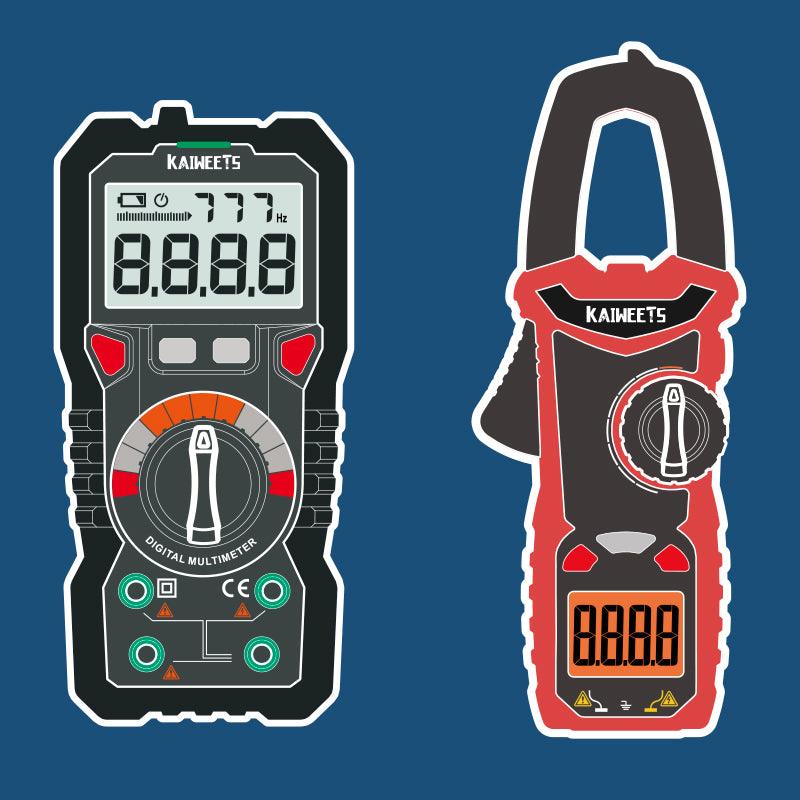
Is a clamp meter the same as a multimeter?
No. A clamp meter is optimized for non-intrusive current measurement, while a multimeter is primarily designed for detailed circuit measurements through test leads.
Many clamp meters include multimeter functions, so their capabilities can overlap. See clamp meter vs. multimeter for a complete comparison and buying guide.

Conclusion
A clamp meter measures current by detecting the magnetic field around a single conductor. It allows current to be checked without disconnecting the wire or routing the full load through the meter.
AC-only clamp meters are suitable for many building electrical systems. AC/DC models are more appropriate for automotive and battery-powered applications.
When choosing a clamp meter, focus on the current type, range, resolution, jaw size, and safety category. The right instrument should match both the measurement and the electrical environment in which it will be used.


Commenta
Nota che i commenti devono essere approvati prima di essere pubblicati.
Questo sito è protetto da hCaptcha e applica le Norme sulla privacy e i Termini di servizio di hCaptcha.