


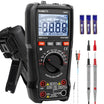

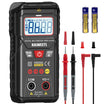
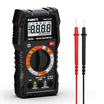

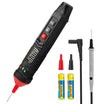


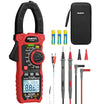
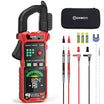
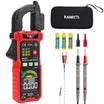
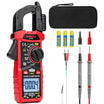

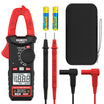

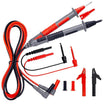


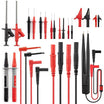
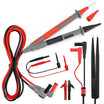


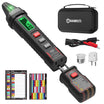
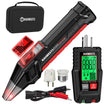

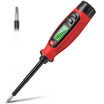

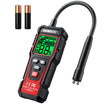
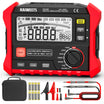
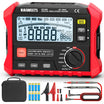





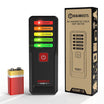










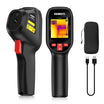

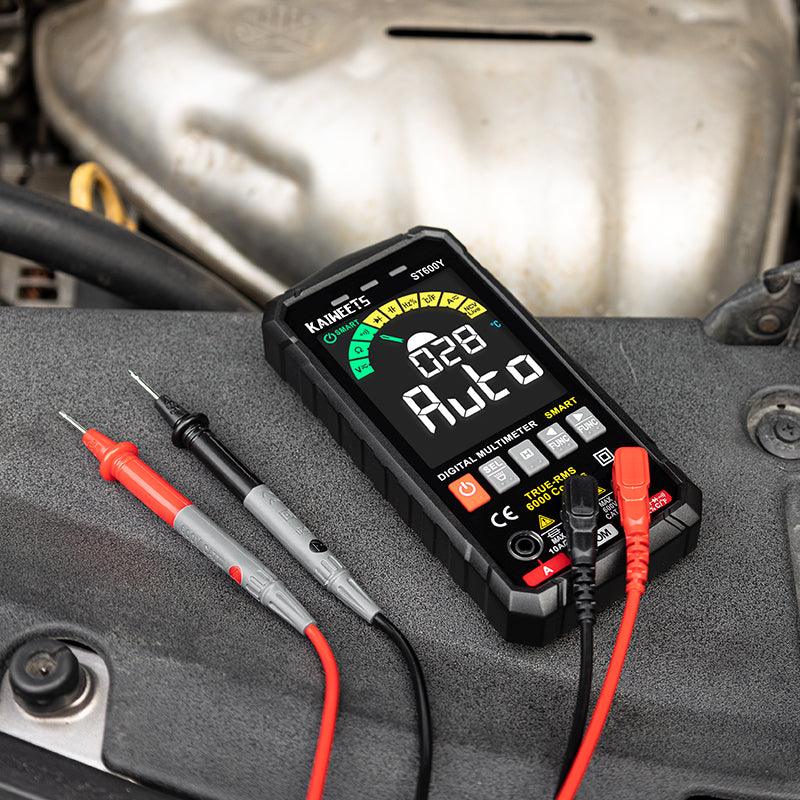
A multimeter can help you find electrical faults that prevent a car AC compressor from operating. It cannot confirm refrigerant charge, internal compressor damage, or every computer-controlled fault, so use it to narrow the diagnosis before replacing parts. A digital multimeter, the vehicle wiring diagram, and the manufacturer's service information are the most useful starting points.
How do you test a car AC compressor with a multimeter?
Test the compressor by checking its power supply, ground path, and control circuit against the specifications for your exact vehicle. Start with the ignition off, and use DC voltage for vehicle electrical tests.
Step 1: Identify the compressor type and circuit
Identify whether your vehicle uses a clutch-type compressor or a variable-displacement compressor before probing any connector. A clutch-type unit has an electromagnetic clutch that clicks and turns the compressor hub when engaged. Many newer vehicles use electronically controlled compressors that may not have a conventional clutch, so a scan tool and factory wiring diagram are often required.
Step 2: Inspect the belt, connector, and wiring
A visual inspection can reveal a simple fault before electrical testing begins. With the engine off, look for a damaged drive belt, loose connector, rubbed-through wiring, corrosion, or oil residue near AC fittings. Do not open refrigerant lines or press a service-port valve during this inspection.
Step 3: Confirm that the vehicle is requesting AC operation
The compressor must be commanded on before a live-circuit voltage test is meaningful. Start the vehicle in a well-ventilated area, select AC and a low temperature setting, then use the vehicle service information to confirm the conditions that permit compressor operation.
Low refrigerant pressure, extreme ambient conditions, engine overheating, a failed cooling fan, or a stored HVAC fault can cause the control module to withhold the command. A scan tool is the reliable way to check those conditions on many modern vehicles.
Step 4: Check for supply voltage at the compressor connector
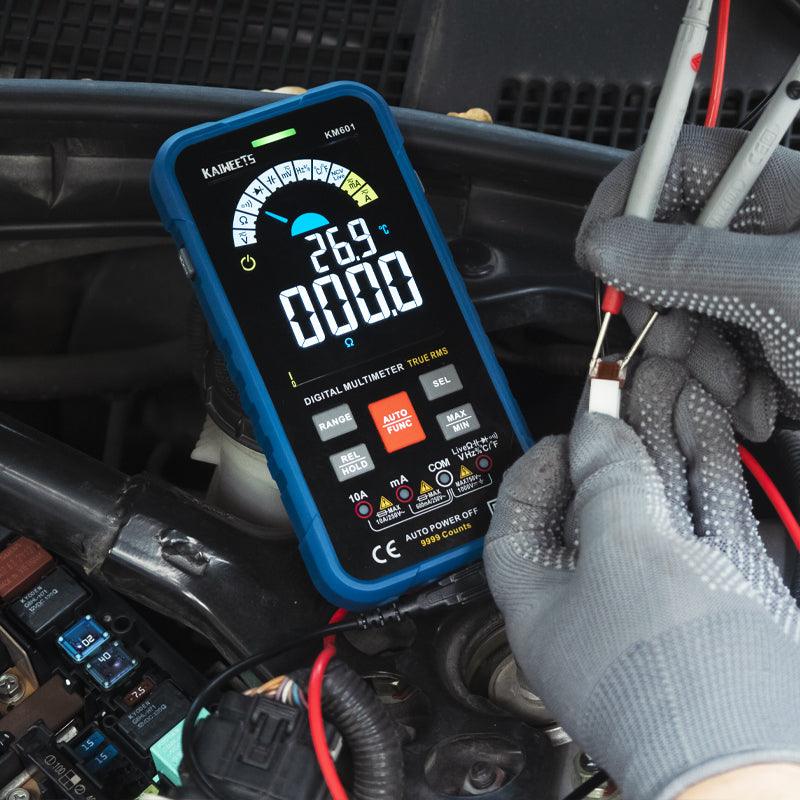
A commanded clutch circuit normally receives system voltage at its feed terminal. Set the multimeter to DC volts, connect the black lead to a known-good chassis ground or battery negative terminal, and carefully back-probe the power terminal specified in the wiring diagram.
Compare the result with the vehicle specification rather than relying on a universal number. If the circuit is commanded on but supply voltage is missing, inspect the applicable fuse, relay, wiring, and control signal before condemning the compressor.
Step 5: Check the ground side under load
A good ground path has very little voltage drop while the circuit is operating. With the component commanded on, measure between the compressor ground terminal and battery negative as directed by the wiring diagram. A reading that is higher than the manufacturer's limit can indicate corrosion, damaged wiring, or a poor ground connection.
Step 6: Test clutch-coil resistance only with power removed
Resistance testing is useful only for a conventional clutch coil and only after the connector is unplugged and the circuit is de-energized. Set the meter to ohms and compare the coil reading with the vehicle service specification.
An open circuit can indicate a failed coil. A reading far outside specification can also indicate a problem, but do not use a generic resistance range because coil design varies by vehicle. Do not measure resistance on a powered circuit or on an electronically controlled compressor unless the manufacturer specifically calls for that test.
Step 7: Check the fuse and relay using the wiring diagram
The fuse and relay should be tested according to their circuit roles, not by appearance alone. Check a fuse for continuity with power removed, then check for voltage on both sides when the circuit is commanded on. For a relay, verify its power feed, control signal, ground, and switched output as shown in the vehicle wiring diagram.
What do the test results mean?
The results help separate a wiring or control problem from a compressor fault. They do not replace a complete AC performance test.
- Voltage is missing at the compressor: Trace the fuse, relay, wiring, pressure inputs, and control-module command.
- Voltage and ground are correct but a clutch does not engage: The clutch coil or clutch assembly may be faulty.
- The clutch engages but cabin air is still warm: The fault may involve refrigerant charge, airflow, a restriction, or internal compressor wear.
- A variable compressor has correct electrical signals but poor cooling: Professional pressure testing and scan-tool data are usually needed.
What are the common signs of a car AC compressor problem?
Weak cooling, unusual noise, or an AC system that cycles unexpectedly can point to a compressor-related problem, but they can also have other causes.
- Air from the vents stays warm when AC is selected.
- The compressor clutch does not engage on a vehicle designed with one.
- A grinding or rattling sound appears when the AC operates.
- The drive belt slips, squeals, or shows visible damage.
- The compressor connector or nearby wiring is loose, damaged, or corroded.
- Cooling changes with engine speed or when the vehicle is idling.
Do not assume the compressor is the cause based on one symptom. A blocked condenser, cooling-fan fault, refrigerant leak, pressure sensor issue, or HVAC control fault can produce similar symptoms.
When should you stop and use a professional AC technician?
Stop the DIY diagnosis when the repair requires opening the refrigerant circuit, recovering refrigerant, or interpreting pressure readings. Refrigerant is pressurized, and some newer systems use refrigerants with specific safety requirements.
In the United States, refrigerant must not be intentionally vented. Paid motor-vehicle AC service involving refrigerant is subject to EPA Section 609 requirements, including proper technician certification and approved recovery equipment. Review the EPA's current MVAC servicing requirements before arranging refrigerant work.
How does a car AC compressor work?
The compressor circulates refrigerant through the air-conditioning system so heat can be removed from the cabin. It draws in low-pressure refrigerant vapor from the evaporator, compresses it, and sends it to the condenser as a high-pressure vapor.
At the condenser, heat is released outside the vehicle. The refrigerant then passes through the rest of the system and absorbs heat from cabin air at the evaporator. On clutch-type systems, an electromagnetic clutch connects the compressor to the engine drive when cooling is requested. Other systems regulate compressor output electronically.
How can you help protect the AC compressor?
Routine inspections can help catch external problems before they damage the compressor. Follow the maintenance schedule for your vehicle rather than using a fixed replacement interval.
- Run the AC periodically during the year to confirm that it operates normally.
- Inspect the drive belt and visible wiring during routine under-hood checks.
- Keep leaves and debris from blocking airflow through the condenser area.
- Have persistent weak cooling, leaks, or unusual noise diagnosed promptly.
A technician should identify and repair the underlying cause before a failed compressor is replaced. Installing a new compressor without correcting contamination, a restriction, or an electrical fault can cause another failure.
Frequently Asked Questions:
Can a multimeter tell whether an AC compressor has failed?
A multimeter can identify many electrical faults, including missing voltage, a poor ground, or an open clutch coil. It cannot measure refrigerant charge or reliably confirm internal mechanical damage, so a complete diagnosis may require a scan tool and professional AC equipment.
Should I use AC volts or DC volts to test a car AC compressor?
Use DC volts for the vehicle's 12-volt electrical system. AC volts is not the correct setting for checking a compressor clutch feed, relay output, or most automotive control circuits.
Why does my AC compressor have power but not turn on?
On a clutch-type compressor, correct power and ground with no engagement can indicate a failed clutch coil or mechanical clutch problem. On electronically controlled systems, the command and compressor response must be checked with the manufacturer procedure.
Can low refrigerant stop the compressor from running?
Yes. Many vehicles prevent compressor operation when pressure data indicates a condition that could damage the system. The cause may be a refrigerant leak, but the pressure sensor, wiring, or control system can also be responsible.
How often should a car AC compressor be replaced?
A compressor has no universal replacement interval. Replace it only after a correct diagnosis confirms that it has failed and the cause of the failure has been addressed.
Can I add refrigerant after testing the electrical circuit?
Only use the refrigerant and service procedure listed on the vehicle's under-hood label. Incorrect refrigerant, incorrect charge quantity, or mixing refrigerants can damage the system and create safety issues, so refrigerant service is best handled by a qualified technician.
Final Note:
Testing a car AC compressor with a multimeter starts with the electrical circuit, not a guess at the compressor itself. Verify the vehicle's command, power supply, ground, and component specifications before replacing parts. When the issue involves refrigerant, pressure, or a computer-controlled compressor, have the system evaluated by a qualified automotive AC technician.


Leave a comment
All comments are moderated before being published.
This site is protected by hCaptcha and the hCaptcha Privacy Policy and Terms of Service apply.