













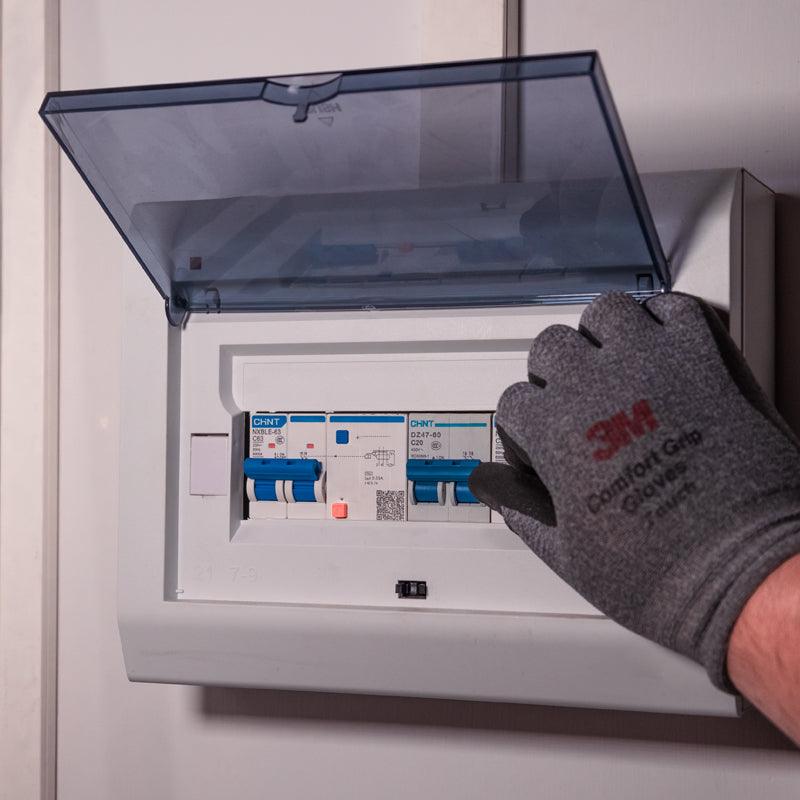
A circuit breaker trips to interrupt power when it detects a condition that could overheat wiring or create another electrical hazard. A single trip can happen after a temporary overload. Repeated trips usually mean the circuit, an appliance, or the electrical system needs attention.
What Should You Do When a Circuit Breaker Trips?
Start by removing the load from the circuit, reset the breaker once, and stop if it trips again or you notice a warning sign.
Step 1: Watch for urgent warning signs
Leave the breaker off and call a licensed electrician if you notice a burning smell, smoke, scorch marks, buzzing, a hot panel, or water near electrical equipment. Do not touch a wet electrical panel or try to reset a breaker under those conditions.
Step 2: Turn off or unplug the affected devices
Switch off lights and unplug portable devices on the affected circuit before resetting it. This removes the immediate load and makes it easier to identify whether a connected appliance is involved.
If the panel labels are missing or unclear, identify the correct breaker before resetting it. This helps prevent you from shutting off an unrelated area of the home.
Step 3: Reset the breaker once
A tripped breaker may rest between the ON and OFF positions. With dry hands and a dry floor, move it firmly to OFF first, then back to ON. Do not repeatedly force a breaker back on if it will not stay reset.
Step 4: Reconnect devices one at a time
If the breaker stays on, reconnect devices gradually. If it trips when a particular appliance is plugged in or switched on, stop using that appliance until it has been repaired or replaced.
Step 5: Reduce the load on the circuit
If the breaker trips only when several devices run together, the circuit may be overloaded. Move a portable device to a different circuit when appropriate, or change how the equipment is used. Do not use a power strip or extension cord to create more permanent capacity.
Step 6: Call a licensed electrician when the cause is not clear
A breaker that trips with everything unplugged can point to a problem in fixed wiring, a connected light fixture, a receptacle, or the protective device itself. These conditions require professional diagnosis.
If you are not comfortable working around an electrical panel, call a licensed electrician rather than attempting to investigate wiring or panel connections yourself.

What Causes a Circuit Breaker to Trip Repeatedly?
A breaker can trip because of an overload, a short circuit, a ground fault, an arc fault, or a problem with the breaker or wiring.
What is a circuit overload?
An overload occurs when a circuit is asked to supply more current than it is designed to carry. It often happens when several high-demand appliances operate on the same circuit at once.
Heat-producing appliances can place a heavy load on a circuit. Avoid running multiple high-wattage devices on the same circuit at the same time. Extension cords should be used only temporarily and must be suitable for the connected equipment.
What is a short circuit?
A short circuit is an unintended low-resistance path between electrical conductors. Damaged insulation, a failed appliance, or a wiring defect can cause one. A short circuit can trip a breaker immediately and should be assessed by a qualified electrician.
Could a ground fault or arc fault be causing the trip?
Modern electrical systems may use GFCI or AFCI protection. A GFCI responds to current taking an unintended path to ground, while an AFCI is designed to detect dangerous arcing conditions. If either device trips repeatedly, do not bypass or replace it with a different type of breaker.
Could the breaker itself be faulty?
Circuit breakers can wear out or develop faults, but a repeatedly tripping breaker should not be assumed to be defective. An electrician should first rule out a connected appliance, a circuit overload, and a wiring problem.
How Can You Help Prevent Circuit Overloads?
The safest way to prevent overloads is to match electrical use to the capacity of each circuit.
- Run one high-wattage appliance at a time on a shared circuit.
- Use extension cords only for temporary use.
- Replace worn, cracked, or damaged cords promptly.
- Keep outdoor electrical equipment on cords rated for outdoor use.
- Do not overload a power strip or plug one power strip into another.
- Never install a higher-rated breaker to stop nuisance trips.
If normal use repeatedly exceeds the available circuit capacity, ask a licensed electrician about adding or upgrading a circuit. Electrical panel work and permanent wiring changes are not DIY repairs.
Frequently Asked Questions
These answers address common concerns about a circuit breaker that keeps tripping.
How do you stop a breaker from tripping?
Find and correct the reason it is tripping. Unplug devices, reset the breaker once, and reconnect items one at a time. If the breaker trips again, leave it off and arrange for an electrician to diagnose the circuit.
Why does a breaker trip when nothing is plugged in?
Hardwired equipment may still be connected to the circuit, including lights, switches, smoke alarms, a dishwasher, or a garbage disposal. The issue may also be in the wiring or a receptacle. A licensed electrician can test the circuit safely.
Can a breaker that keeps tripping be a fire risk?
The trip itself is a protective action, not usually the source of a fire. However, the underlying overload, damaged wiring, loose connection, or failed appliance may be hazardous. Treat repeated trips as a warning that needs attention.
Should you replace a breaker that keeps tripping?
Do not replace a breaker solely because it trips. Replacing it without identifying the cause can leave a wiring or appliance fault unresolved. An electrician can determine whether the breaker, the circuit, or connected equipment needs repair.

When to Call an Electrician
Call a licensed electrician when a breaker trips repeatedly, trips immediately after resetting, affects a major appliance, or shows signs of heat or damage. Prompt diagnosis helps protect the electrical system and avoids repeated loss of power.
Dig deeper:

Leave a comment
All comments are moderated before being published.
This site is protected by hCaptcha and the hCaptcha Privacy Policy and Terms of Service apply.