










































What Is a Transformer?
A transformer transfers alternating-current (AC) electrical energy between circuits through electromagnetic induction. It can raise or lower voltage while keeping the primary and secondary circuits electrically isolated in most transformer designs.
The two common transformer types are:
- Step-up transformer: increases the output voltage.
- Step-down transformer: decreases the output voltage.
A conventional transformer has a primary winding connected to the supply and a secondary winding connected to the load. Its voltage ratio depends on the number of turns in each winding. Some designs, including autotransformers, intentionally share a winding and do not provide primary-to-secondary isolation.
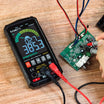
A multimeter can help find an open winding, a shorted winding, or an obvious connection fault. It cannot confirm every transformer fault or fully assess insulation condition, especially on mains-powered or high-voltage equipment.
Tools Required for Testing a Transformer
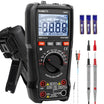
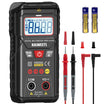
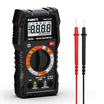
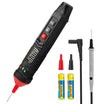
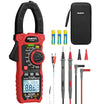
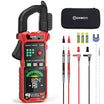
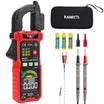
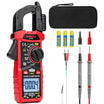
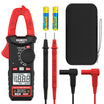
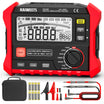
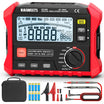
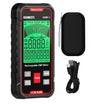
- A digital multimeter
- The transformer wiring diagram, terminal markings, or manufacturer specifications where available

How to Test a Transformer With a Multimeter
Use a multimeter to compare each winding's resistance and check for unintended continuity. Disconnect the transformer completely from power before using the resistance setting.
Switch off, isolate, and lock out the supply where applicable before testing. Verify that the transformer terminals are de-energized with a properly rated voltage tester before touching them. Capacitors and connected equipment can retain or backfeed hazardous voltage. Do not perform energized tests unless you are qualified and following the equipment manufacturer's procedure.
1. Identify the Transformer Terminals
Use the wiring diagram, terminal labels, or service documentation to identify the primary and secondary windings. Disconnect loads and external wiring where practical so they cannot affect the reading. Never assume two terminals belong to the same winding based only on their location.
2. Set the Multimeter to Resistance (Ω)
Set the meter to resistance. An auto-ranging meter can select the range automatically. On a manual-ranging meter, begin with a higher range and reduce it until you obtain a stable reading.
3. Measure Each Winding
Place one probe on each terminal of the same winding. Record the reading, then repeat for every winding or tap combination identified in the documentation.
- Normal result: A complete winding usually shows a finite, stable resistance value.
- Open winding: OL, O.L., or an unchanged over-range display may indicate a broken winding, thermal fuse, lead, or connection.
- Possible shorted winding: A reading much lower than the documented value can indicate a fault, but a low reading alone is not conclusive. Small transformers can legitimately have very low winding resistance.
Do not rely on a generic resistance range. Winding resistance varies significantly with transformer size, wire gauge, temperature, winding design, and rated voltage. Compare the result with the manufacturer's specification or an identical known-good unit whenever possible.
4. Screen for Unintended Continuity
For an isolating transformer, check between the primary and secondary windings, then between each winding and the metal core or enclosure.
- Primary to secondary: A conventional isolation transformer should not show a low-resistance connection. A low reading can indicate a fault, unless the unit is an autotransformer or another design with a shared winding.
- Winding to core: A normal reading should be over-range or extremely high. A measurable low resistance may indicate damaged insulation or a contaminated connection.
A standard multimeter provides only a basic screening test for insulation. A qualified technician should use a correctly rated insulation-resistance tester and the manufacturer's test voltage when a detailed insulation assessment is required.
How to Interpret Transformer Multimeter Readings
A multimeter reading is useful when it is evaluated against the transformer's design and documented values, not as a standalone pass-or-fail result.
| Reading or symptom | What it may indicate | Recommended next step |
|---|---|---|
| OL across a known winding | An open winding, open thermal protector, damaged lead, or poor terminal connection | Check accessible leads and consult the wiring diagram. Replace or service the transformer if the winding is confirmed open. |
| Finite, stable resistance across a winding | The winding is electrically continuous | Compare the value with the specification or a known-good transformer. |
| Very low resistance | May be normal for a high-current secondary, or may indicate a shorted winding | Check the specified resistance and investigate overheating, odor, or abnormal output. |
| Low resistance between isolated windings or to the core | Possible insulation failure or a wiring error | Remove the transformer from service and have it evaluated with appropriate insulation-testing equipment. |
Signs of Transformer Failure
Electrical readings should be considered alongside the transformer's operating condition. Remove the transformer from service and investigate when you notice any of these signs:
- Overheating or a burnt odor: Excessive heat can point to overload, poor ventilation, or internal damage.
- Unusual noise: A steady low hum can be normal. New or unusually loud buzzing, rattling, or vibration needs inspection.
- Visible damage: Look for discolored insulation, loose terminals, damaged enclosures, or leaked fluid on liquid-filled equipment.
- Unstable output: Repeated protective-device trips or an output voltage outside specification can indicate a transformer or connected-circuit problem.
Common Transformer Testing Questions
Should a transformer have continuity?
Each complete winding should normally have continuity, meaning the meter shows a finite resistance. There should usually be no low-resistance continuity between the primary and secondary of an isolation transformer. Check the transformer's documentation first, because autotransformers and tapped windings are designed differently.
Can a multimeter confirm that a transformer is good?
No. A multimeter can reveal an open winding, an unexpected low-resistance path, or an obvious wiring issue. It cannot reliably detect every shorted turn, verify insulation performance at operating voltage, or confirm output regulation under load. A transformer that passes basic resistance checks may still require professional testing.
What transformer tests are used beyond a multimeter check?
Professional testing depends on the transformer type and application. Common tests include winding-resistance comparison, turns-ratio testing, insulation-resistance testing, and controlled load testing. Larger power transformers may also need specialized diagnostic testing performed by qualified personnel.
Dig deeper:



1 commento
shedrick
Very informative article on transformer testing
Commenta
Nota che i commenti devono essere approvati prima di essere pubblicati.
Questo sito è protetto da hCaptcha e applica le Norme sulla privacy e i Termini di servizio di hCaptcha.