


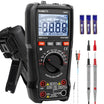

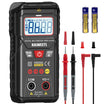


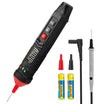


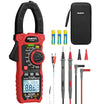


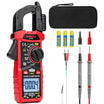

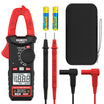














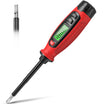
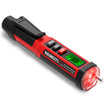



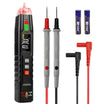
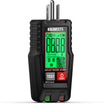








































To test a voltage regulator with a multimeter, first check what kind of regulator you are working with. On a car, the test is usually done at the battery: measure voltage with the engine off, then measure charging voltage with the engine running. On a circuit board, the test is more direct: check the regulator’s input, ground, and output points.
A voltage regulator keeps voltage within a usable range. This guide starts with the common automotive test, then covers how to test a voltage regulator in an electronic circuit.
How to Test a Car Voltage Regulator with a Multimeter
A car voltage regulator helps control the alternator’s output. If it fails, the battery may not charge properly, or the charging system may send too much voltage to the battery.
In many modern vehicles, the voltage regulator is built into the alternator or controlled by the vehicle’s computer. That means you usually do not test it as a separate part. Instead, you test how the charging system behaves at the battery.
Tools You Need
You only need a digital multimeter for the basic test. Make sure it can measure DC voltage. If you also want to check alternator ripple, the meter should measure AC voltage as well.
Before you start, park the vehicle safely, set the parking brake, and keep your hands away from belts, pulleys, and cooling fans. Do not disconnect the battery while the engine is running. That old method can damage modern vehicle electronics.
Step 1: Check Battery Voltage with the Engine Off
- Start with the engine off.
- Set the multimeter to DC voltage. If your meter is not auto-ranging, choose a range above 20V DC.
- Touch the red probe to the positive battery terminal. Touch the black probe to the negative battery terminal. Read the voltage on the display.
A healthy, fully charged 12V car battery often reads around 12.6V to 12.7V. If the reading is around 12.4V, the battery still has usable charge, but it is not fully charged. If it is much lower than 12.2V, charge or test the battery before blaming the voltage regulator.
This first reading matters. A weak battery can make the rest of the test confusing.
| Engine Off Reading | What It Usually Means |
|---|---|
| 12.6V to 12.7V | Battery is well charged |
| Around 12.4V | Battery has usable charge |
| Around 12.2V or lower | Battery is low |
| Below 12V | Charge or test the battery first |
Quick Note: Why Does a 12V Car Battery Read 12.6V?
A “12V” car battery does not actually measure exactly 12.0 volts when it is fully charged. A standard lead-acid car battery has six cells connected in series. Each healthy, fully charged cell produces about 2.1 volts.
That is why a fully charged battery usually reads around 12.6V:
So, 12V is the battery’s nominal rating, while about 12.6V is closer to a fully charged resting voltage.
Step 2: Check Charging Voltage with the Engine Running
Keep the multimeter probes on the battery terminals. Start the engine and let it idle.
The voltage should usually rise above the engine-off reading. On many vehicles, a normal charging voltage is around 13.5V to 14.5V.
For example, if the battery reads 12.6V with the engine off and 14.2V with the engine running, the charging system is probably working normally at idle.
If the reading stays close to 12.6V, the battery is likely not being charged. Do not replace the voltage regulator yet. First, make sure the belt is turning the alternator, the battery terminals are clean, and the main charging connections are tight.
If the reading climbs above 15V and stays there, the system may be overcharging. In that case, the voltage regulator becomes a stronger suspect.
| Engine Running Reading | Possible Meaning |
|---|---|
| 13.5V to 14.5V | Usually normal on many vehicles |
| Around 12.6V or lower | Charging system may not be working |
| Below 13V | Possible undercharging |
| Above 15V | Possible overcharging |
| Above 16V | Stop testing and diagnose before driving |
Some newer vehicles use smart charging systems. Their voltage may change depending on battery condition, temperature, electrical load, and computer control. If the reading looks unusual on a newer vehicle, check the service manual before replacing parts.
Step 3: Test the Charging System Under Load
A charging system can look normal at idle but act differently when the vehicle needs more power.
With the engine running, turn on the headlights and the cabin fan. Watch the multimeter while the extra load is on.
The reading may dip for a moment. That is normal. What matters is whether it recovers and stays in a reasonable range.
If the voltage drops and stays low, the charging system is not keeping up. Before blaming the regulator, check the simple things first: loose battery terminals, dirty connections, or a weak alternator belt.
If the voltage rises too high under load, the regulator or charging control circuit needs closer attention.
Step 4: Check AC Ripple from the Alternator
An alternator creates AC power internally, then converts it to DC power for the vehicle. If the alternator diodes fail, too much AC ripple can reach the battery.
This problem can look like a voltage regulator issue because the charging voltage may become unstable.
To check AC ripple, set the multimeter to AC voltage. Keep the probes on the battery terminals while the engine is running. A small AC reading may be normal, but a high or unstable AC voltage reading can point to an alternator diode problem.
If the AC ripple looks abnormal, do not replace the voltage regulator right away. The alternator may need further testing.
Step 5: Check the Wiring and Ground
Bad wiring can make a good alternator or regulator look bad.
If charging voltage is low, inspect the battery terminals first. Corrosion, loose clamps, or damaged cables can stop current from moving properly.
You can also do a simple voltage drop check. With the engine running, measure between the alternator output terminal and the battery positive terminal. A high reading means there may be too much resistance on the positive side.
Then measure between the alternator case and the battery negative terminal. A high reading here points to a poor ground path.
If you find high resistance, clean and tighten the connections before replacing expensive parts.
How Do I Know If the Problem Is the Voltage Regulator or the Alternator?
If the charging voltage is too high, the voltage regulator is one of the first parts to suspect. A regulator that cannot control alternator output may let the voltage climb above the normal range.
If the voltage is too low, do not replace the regulator right away. First check the basics. Make sure the battery terminals are clean, the belt is in good condition, and the alternator connections are tight.
A multimeter tells you what the charging system is doing. It does not always point to one failed part immediately. Use the voltage reading as a starting point, then keep checking the parts around it.
How to Test a Voltage Regulator in an Electronic Circuit
A voltage regulator in an electronic circuit is tested differently from a car voltage regulator.
Here, you are usually checking whether voltage goes into the regulator and whether the correct voltage comes out. Most small regulators have three important points: input, ground, and output.
This applies to many common regulators and modules, such as 5V regulators, 12V regulators, adjustable regulators, and DC buck converter modules. The exact pin layout may be different, but the testing idea is the same.
Step 1: Identify the Input, Ground, and Output Points
Before you measure anything, make sure you know which point is input, which one is ground, and which one is output.
Do not guess by shape or pin position. Look for the part number on the regulator, check the board marking, or use the datasheet if the part is readable. Regulators that look similar can have different pin layouts, so guessing can give you a wrong reading or even damage the circuit.
Find these three points first:
- Input
- Ground
- Output
If the regulator is already installed on a circuit board, ground may be easier to find at a marked GND point, the negative side of the power input, or a large ground area on the board.
Before powering the circuit, take a quick look around the regulator. If you see burn marks, a cracked part, or a damaged solder joint, the problem may not be the regulator alone.
Step 2: Measure the Input Voltage
- Set the multimeter to DC voltage.
- Place the black probe on ground.
- Touch the red probe to the input point of the regulator.
The regulator needs enough input voltage before it can produce the correct output. For example, a 5V regulator usually needs more than 5V at the input side. If the input voltage is too low, the output will also be too low.
That does not mean the regulator is bad. It simply means the regulator does not have enough voltage to work with.
If there is no voltage at the input point, move back toward the power source and test the previous point in the circuit. The problem is before the regulator, not after it.
Step 3: Measure the Output Voltage
- Keep the black probe on ground.
- Move the red probe to the output point.
- Now compare the reading with the expected output.
The output should match the voltage the regulator is supposed to provide. A 5V regulator should read close to 5V. An adjustable regulator should match the voltage it was set for.
If the input voltage is correct but the output is very low, check the load side before blaming the regulator. A shorted component can pull the voltage down and make the regulator look faulty.
If the output is too high or keeps moving around, the regulator may be damaged, or the feedback circuit may not be working correctly.
Turn off the power before checking for shorts or replacing parts.
Step 4: Test the Regulator Under Load
A regulator can read correctly with no load, then fail when the circuit starts drawing current.
If the output voltage looks normal with the load disconnected, reconnect the load and measure the output again. If the voltage stays close to the expected value, the regulator is probably handling the load.
If the voltage drops sharply, turn the power off and check the output side. Use resistance or continuity mode to measure between output and ground. A very low reading may mean the output side is shorted.
Do not install a new regulator until the short is fixed. Otherwise, the new part may fail as soon as power is applied.
A simple way to read the result:
- Output stays normal: the regulator is likely working.
- Output drops under load: check the load side first.
- Regulator gets hot quickly: turn off power and check for a short or overload.
Final Thoughts
Testing a voltage regulator with a multimeter is mostly about knowing where to measure.
A reliable digital multimeter makes the process much easier. It shows what the voltage is actually doing, so you are not guessing from symptoms alone.
FAQ
Can You Test a Voltage Regulator Without Removing It?
Yes. On a car, you can usually test it at the battery without removing the alternator or regulator. Check the battery voltage with the engine off, then check the charging voltage with the engine running.
On a circuit board, you can often test the regulator in place by measuring input, ground, and output. Just be careful with the probe tips, especially if the pins are close together.
What Should a Voltage Regulator Read on a Multimeter?
For a car, a healthy battery often reads around 12.6V with the engine off. With the engine running, many charging systems read around 13.5V to 14.5V.
For a regulator in an electronic circuit, the output should match the voltage the regulator is designed to provide. A 5V regulator should read close to 5V. An adjustable regulator should match the voltage it was set for.
Why Does My Voltage Regulator Have Input Voltage but No Output?
If the input voltage is normal but the output is missing, do not replace the regulator right away. Turn off the power and check the output side first.
If output is shorted to ground, the regulator may be protecting itself, or the circuit may be pulling the voltage down. If there is no short, check the pinout one more time before replacing the part.
Can a Bad Voltage Regulator Drain a Battery?
Yes, it can lead to battery problems. If the charging system undercharges, the battery may not recover while the engine is running. If it overcharges, the battery can be damaged over time.
That said, a weak battery or a problem inside the alternator can cause similar symptoms. Use the multimeter readings to guide the next check.
Should You Disconnect the Battery to Test a Voltage Regulator?
No. Do not disconnect the battery while the engine is running.
That old method is risky on modern vehicles because it can create voltage spikes. Testing with a multimeter at the battery terminals is safer and gives you a clearer reading.


Commenta
Nota che i commenti devono essere approvati prima di essere pubblicati.
Questo sito è protetto da hCaptcha e applica le Norme sulla privacy e i Termini di servizio di hCaptcha.