

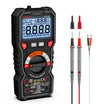
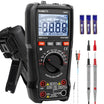

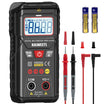
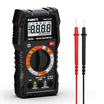

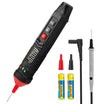


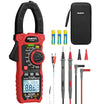
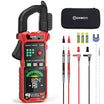
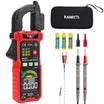
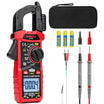

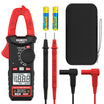















What can a multimeter tell you about a solar panel?
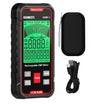
A digital multimeter can show whether a solar panel is producing open-circuit voltage and short-circuit current. These two readings do not replace a full professional test, but they are useful for basic troubleshooting.
Before you test the panel, check the label on the back. The most important values are usually listed there:
- Voc: Open-circuit voltage with no load connected.
- Isc: Short-circuit current under test conditions.
- Vmp: Voltage at the panel’s maximum power point.
- Imp: Current at the panel’s maximum power point.
Do not judge every solar panel by a fixed 12V target. A panel made for a 12V battery system often has an open-circuit voltage higher than 12V, and larger panels can be much higher.
How does a solar panel produce electricity?
A solar panel produces electricity when sunlight activates photovoltaic cells inside the module. These cells are usually made from silicon, which allows light energy to move electrons and create direct current electricity.
The electricity from a solar panel is DC, so your multimeter should be set to DC voltage when checking the panel output. If the panel is part of a complete solar system, a charge controller or inverter manages the power after it leaves the panel.
What should you check before testing a solar panel?
You should test only a single, accessible solar panel if you can do so safely. Do not open, disconnect, or test a roof-mounted solar array or a grid-tied system unless you are qualified to work on it.
Solar panels can produce electricity whenever light reaches them. Before touching the terminals, make sure the panel is stable and the leads are not damaged.
- Use a multimeter and test leads rated for the panel voltage.
- Keep your fingers away from the metal probe tips.
- Do not test current if the panel’s Isc is higher than your meter’s current range.
- Do not connect a solar panel directly to a battery without a proper charge controller.
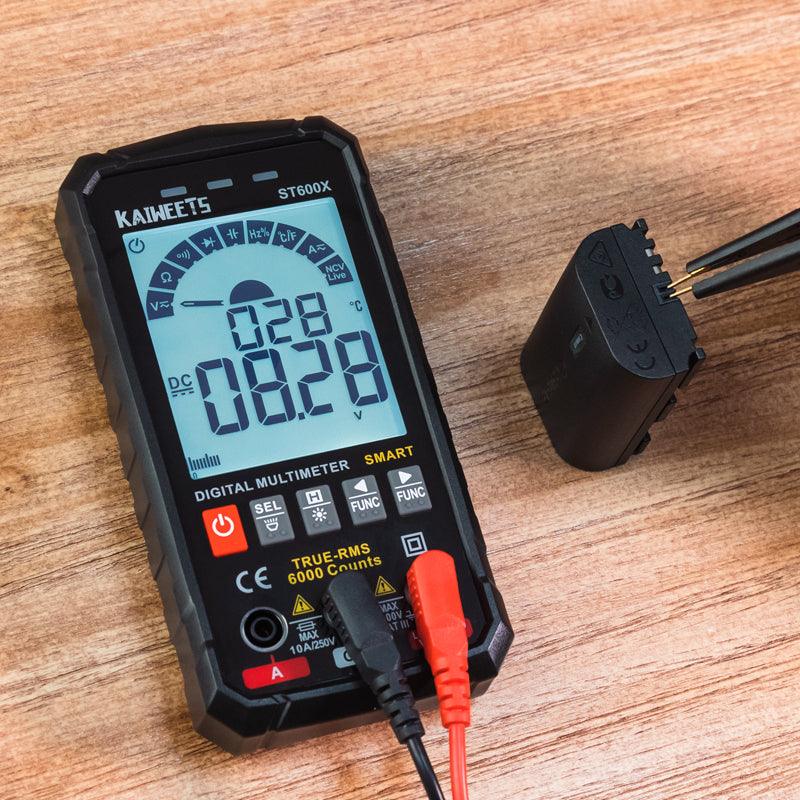
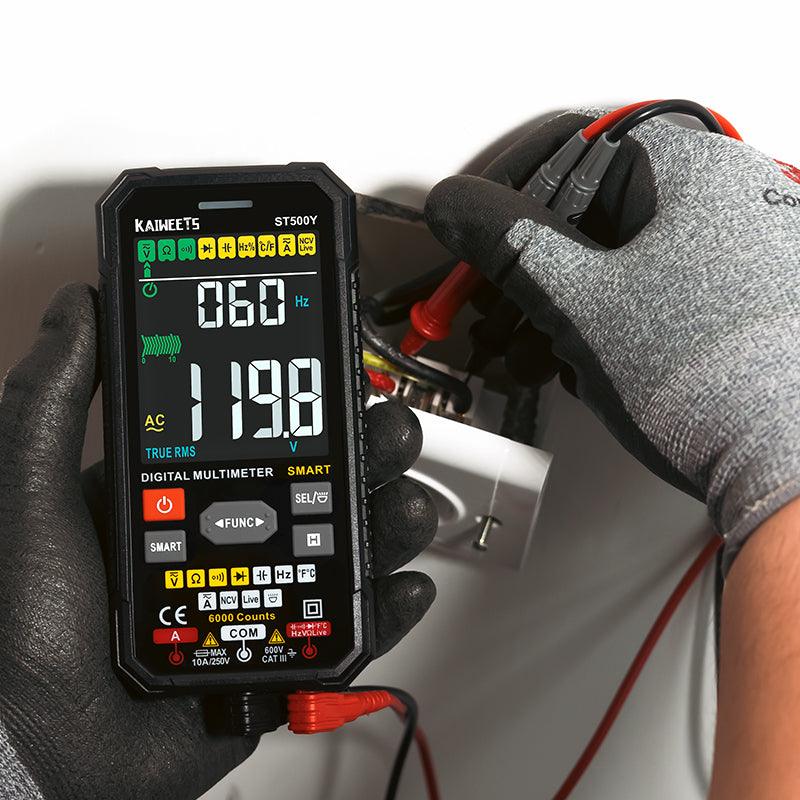
If you are new to meter ports and dial settings, a basic guide on how to use a multimeter can help you confirm the correct setup before working on a live panel.
How to test solar panel voltage with a multimeter
To test solar panel voltage, measure the panel’s open-circuit voltage in direct sunlight and compare it with the Voc value on the label.
- Place the solar panel in direct sunlight and face it toward the sun.
- Set your multimeter to DC voltage. Choose a range higher than the panel’s listed Voc if your meter is not auto-ranging.
- Plug the black lead into the COM port and the red lead into the voltage port.
- Touch the red probe to the positive solar panel terminal.
- Touch the black probe to the negative solar panel terminal.
- Read the voltage on the multimeter display.
A healthy panel should usually show a voltage close to its listed Voc in strong sunlight. The reading may be lower if the panel is shaded, dirty, very hot, or not aimed well at the sun.
If the reading is negative, the probes are reversed. If the reading is zero, check the sunlight, terminal contact, cable condition, and panel polarity before assuming the panel has failed.
How to test solar panel current with a multimeter
To test solar panel current, measure short-circuit current only when your multimeter’s current range is higher than the panel’s listed Isc.
This step is where many people damage their meters. Many handheld multimeters have a 10A current port, but some solar panels can exceed that. If your panel’s Isc is higher than your meter rating, use a DC clamp meter or a solar panel tester instead.
- Check the Isc value on the solar panel label.
- Confirm that your multimeter current range and fuse can handle that current.
- Move the red lead to the correct amp port.
- Set the multimeter to DC amps.
- Touch the red probe to the positive terminal and the black probe to the negative terminal.
- Read the current, then disconnect the probes promptly.
This test temporarily shorts the panel through the meter, so do not hold the connection longer than needed. A current reading lower than the label is normal if sunlight is weak or the panel is not facing the sun directly.
Can you calculate solar panel watts with a multimeter?
A multimeter can help you estimate solar panel output, but it cannot confirm rated wattage accurately without the right load.
Power is calculated by multiplying voltage by current. However, open-circuit voltage and short-circuit current do not happen at the same operating point, so multiplying Voc by Isc does not give the panel’s real working wattage.
For a more realistic power check, the panel needs to operate under load. A solar charge controller, a matched test load, or a dedicated solar panel tester will give a more useful result than a basic no-load reading.
How can you tell if a solar panel is faulty?
A solar panel may be faulty if its readings stay far below the label values in strong sunlight. One low reading does not prove failure, so check the setup before replacing the panel.
- Zero voltage: The panel may be disconnected, fully shaded, or damaged.
- Negative voltage: The probes are reversed, or the polarity is mislabeled.
- Very low voltage: The panel may have internal damage or a wiring issue.
- Normal voltage but low current: The panel may be shaded, dirty, cracked, or poorly connected.
- Unstable readings: The sunlight may be changing, or the connector may be loose.
Also inspect the glass, frame, junction box, and cables. Cracks, burn marks, water entry, and loose connectors can all affect performance.
Frequently Asked Questions
What voltage should a solar panel show on a multimeter?
A solar panel should show a voltage close to its listed Voc when tested in strong sunlight with no load connected. The correct number depends on the panel, so use the label instead of assuming every panel should read 12V.
Should I test a solar panel on AC or DC voltage?
You should test a solar panel on DC voltage. Solar panels produce direct current, so an AC setting will not give the correct reading.
Can I test a solar panel while it is connected to a charge controller?
For a basic panel check, it is better to disconnect the panel from the charge controller and test the panel terminals directly. If you are not sure how the system is wired, ask a qualified installer before disconnecting anything.
Can a multimeter prove that a solar panel is producing full power?
A multimeter alone cannot prove full rated power. It can check basic voltage and current, but a proper wattage test needs a suitable load or a dedicated solar tester.
How frequently should solar panels be replaced?
Solar panels are usually not replaced on a fixed schedule. Many panels can work for 25 years or longer, but output slowly declines over time. Replacement is more likely when damage, severe degradation, or system upgrades make it necessary.
Conclusion
Testing a solar panel with a digital multimeter is a simple way to check basic panel output. Start with open-circuit voltage, then test current only if your meter can safely handle the panel’s Isc rating.
The most important rule is to compare your readings with the values printed on the solar panel label. This gives you a much more accurate result than relying on a generic voltage number.

Dig deeper:


Dejar un comentario
Todos los comentarios se revisan antes de su publicación.
Este sitio está protegido por hCaptcha y se aplican la Política de privacidad de hCaptcha y los Términos del servicio.