

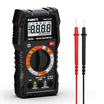

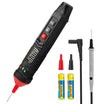


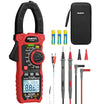
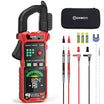


















When shopping for a multimeter, you may see ratings such as CAT II, CAT III or CAT IV listed in the product specifications. You may also come across safety guides or tutorials that tell you to check a meter’s CAT rating before measuring certain circuits.
But what does CAT actually mean on a multimeter?
In this guide, we’ll explain what CAT ratings on multimeters mean, and why choosing the right rating matters for electrical safety.
What Are CAT Ratings on Multimeters?
CAT ratings, short for category ratings (Measurement Categories), are safety classifications used on multimeters and other electrical test instruments. They describe the type of electrical environment a meter is designed to measure safely.
The term “CAT” comes from measurement categories defined in electrical safety standards such as IEC 61010. These categories exist because not all electrical measurements carry the same level of risk. Measuring a low-voltage electronic circuit is very different from measuring a wall outlet, a breaker panel or a service entrance.
One of the main risks CAT ratings help address is transient overvoltage. A transient overvoltage is a short, sudden voltage spike that can occur in an electrical system. These spikes may be caused by switching events, faults, lightning-related surges or other disturbances in the power system.
The closer a measurement point is to the electrical source, the more energy may be available during a fault or voltage spike. That is why a meter used near a service entrance or distribution panel needs a different level of protection than a meter used on a small electronic circuit.
In modern multimeter specifications, the CAT ratings you are most likely to see are:
- CAT II
- CAT III
- CAT IV
Older explanations may also mention CAT I, which generally refers to protected, low-energy circuits not directly connected to mains power. You will often see these ratings paired with a voltage rating, such as CAT III 600V or CAT IV 300V.
CAT IV, CAT III, CAT II and CAT I Explained
A higher CAT number usually means the meter is designed for tougher electrical environments.
| Safety Category | Where It Applies | Typical Testing Targets | Threat and Energy Level |
|---|---|---|---|
| CAT IV | Outside the building envelope, overhead lines and utility service entrances | Electricity meters, main transformers and underground cable runs | Extreme: Unrestricted short-circuit grid energy |
| CAT III | Inside commercial or industrial building infrastructure | Three-phase distribution panels, bus bars, feeders and heavy motors | High: Massive energy potential within fixed installations |
| CAT II | Low-voltage receptacles and standard end-user environments | Wall outlets, home appliances, residential circuits and power tools | Moderate: Buffered by building wiring impedance |
| CAT I | Isolated, low-energy electronics disconnected from the grid | Microcontrollers, battery-operated devices and regulated circuits | Low: High-energy transient risks have been reduced or isolated |
CAT IV
CAT IV is the highest safety category. It applies to the parts of an electrical system closest to where power enters a building.
At this level, the available energy can be much higher than what you would find at a normal outlet or plug-in device. That is why CAT IV work is usually left to qualified professionals. If a meter is used in this environment, both the CAT IV rating and the voltage rating need to match the job.
CAT III
CAT III covers much of the fixed electrical system inside a building. This is the category most people associate with professional troubleshooting in panels, distribution equipment and hardwired circuits.
The important point is that CAT III is not just about voltage. A reading may look similar to what you see at a wall outlet, but the circuit can deliver much more energy during a fault. That is why a meter used for this kind of work needs a higher safety category than one used only on plug-in devices.
CAT II
CAT II is mainly for equipment connected to a standard outlet. Think of it as the category for the load side of the electrical system, where the building wiring has already added some distance and impedance between the meter and the power source.
A CAT II meter may be suitable for many basic checks on plug-connected equipment, but it is not meant for distribution-level work. Once the job moves behind the outlet and into the building’s wiring system, CAT II is no longer the right category.
CAT I
You may still see CAT I in older charts, manuals or simplified explanations of multimeter safety ratings. In those cases, it usually refers to small electronic circuits that are separate from the building’s mains power system.
Think of battery-powered devices, signal circuits or regulated low-voltage electronics. These are very different from the AC power measurements most people think of when they buy a multimeter.
That is why CAT I is not usually the rating highlighted on modern multimeters for electrical work. If you are choosing a meter for mains measurements, the ratings to focus on are CAT II, CAT III and CAT IV, along with the proper voltage rating.
Decoding the Voltage Rating
A CAT rating is only complete when it is paired with a voltage rating.
A complete safety rating includes two parts:
- The CAT rating tells you the type of electrical environment the meter is designed for.
- The voltage rating tells you the maximum working voltage allowed in that environment.
For example:
- CAT II 600V means the meter is rated for CAT II environments up to 600 volts.
- CAT III 600V means the meter is rated for CAT III environments up to 600 volts.
- CAT IV 600V means the meter is rated for CAT IV environments up to 600 volts.
Although each example lists 600 volts, they do not represent the same level of protection. A CAT IV environment is closer to the source of electrical power and may expose the meter to much higher-energy transients than a CAT II environment.
There is one important point for readers choosing a hand-held multimeter for mains voltage measurements. Under the current IEC 61010 requirements for hand-held multimeters capable of measuring mains voltage, the mains measurement terminals are marked CAT III or CAT IV. CAT II is included in this guide because it helps explain the category system and may still appear in general electrical safety materials or on other types of test equipment.
IEC 61010 is a family of safety standards for electrical measuring equipment. It defines safety requirements and the test conditions used to evaluate equipment for different measurement environments.
However, IEC does not certify each individual multimeter. The rating printed on a product is declared by the manufacturer and may be supported by testing or certification from an independent safety organization.
When comparing meters, look for a clearly stated rating such as CAT III 600V or CAT IV 600V. Where available, certification or approval marks from recognized organizations can provide additional confirmation that the product has been tested against applicable safety requirements.
Three Factors Behind a CAT and Voltage Rating
To understand why the category and voltage must be read together, it helps to look at three factors used in safety testing:
- Working voltage: The normal continuous voltage the meter is designed to measure.
- Peak impulse transient voltage: A brief voltage surge that the meter must be able to withstand under test conditions.
- Source impedance: The impedance of the test source used during the transient test. A lower source impedance can deliver more current and more energy during a surge.
The values in the table below are standardized transient test levels.
| Measurement Category Test Source Impedance | 300V | 600V | 1,000V |
|---|---|---|---|
| CAT II 12 Ω Test Source | 2,500V | 4,000V | 6,000V |
| CAT III 2 Ω Test Source | 4,000V | 6,000V | 8,000V |
| CAT IV 2 Ω Test Source | 6,000V | 8,000V | 12,000V |
Values shown are peak impulse transient test voltage levels applied during safety testing, not the final test results of a specific multimeter.
This table shows two important things.
First, within the same measurement category, a higher working voltage requires a higher transient test voltage. For example, CAT III 600V is tested with a 6,000V transient pulse, while CAT III 1000V is tested with an 8,000V transient pulse.
Second, a higher voltage number does not automatically mean a meter is suitable for a higher-energy environment.
Compare these two ratings:
| Rating | Peak Impulse Transient Test Voltage |
Test Source Impedance |
|---|---|---|
| CAT II 1000V |
6,000V | 12 Ω |
| CAT III 600V |
6,000V | 2 Ω |
Both ratings use a 6,000V transient test level. However, they are not equivalent.
The CAT III 600V test uses a much lower source impedance. At the same transient voltage, a lower-impedance source can deliver more current and more energy. This represents the more demanding transient conditions found in fixed electrical installations.
That is why a CAT III 600V meter may be the correct choice for fixed wiring or distribution equipment, while a CAT II 1000V rating is not a substitute for CAT III work, even though its printed voltage number is higher.
The same principle applies when comparing CAT III and CAT IV ratings. A CAT IV 600V rating is designed for measurement points closer to the source of supply, where the transient risk is more severe than in a CAT III environment.
When choosing a meter, start with the location where it will be used. Then select a voltage rating that meets or exceeds the working voltage you may encounter in that category.
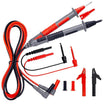
Also remember that the meter is only one part of the measurement setup. Test leads and probes must also have the proper category and voltage ratings for the task. A properly rated meter cannot make damaged or lower-rated leads safe to use.
CAT ratings on multimeters are not just technical labels. They help you understand where a meter is designed to be used and what type of transient stress it is built to withstand.
By reading the CAT rating and voltage rating together, you can choose a digital multimeter more responsibly and avoid using a meter in an electrical environment for which it was not designed.
Dig deeper:

Leave a comment
All comments are moderated before being published.
This site is protected by hCaptcha and the hCaptcha Privacy Policy and Terms of Service apply.