

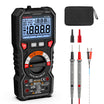
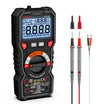
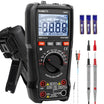

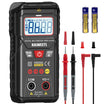
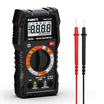

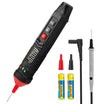


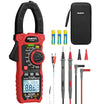
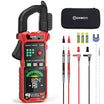
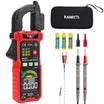






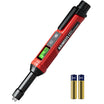
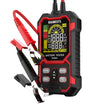
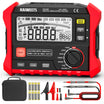
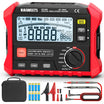
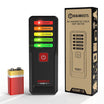






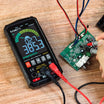
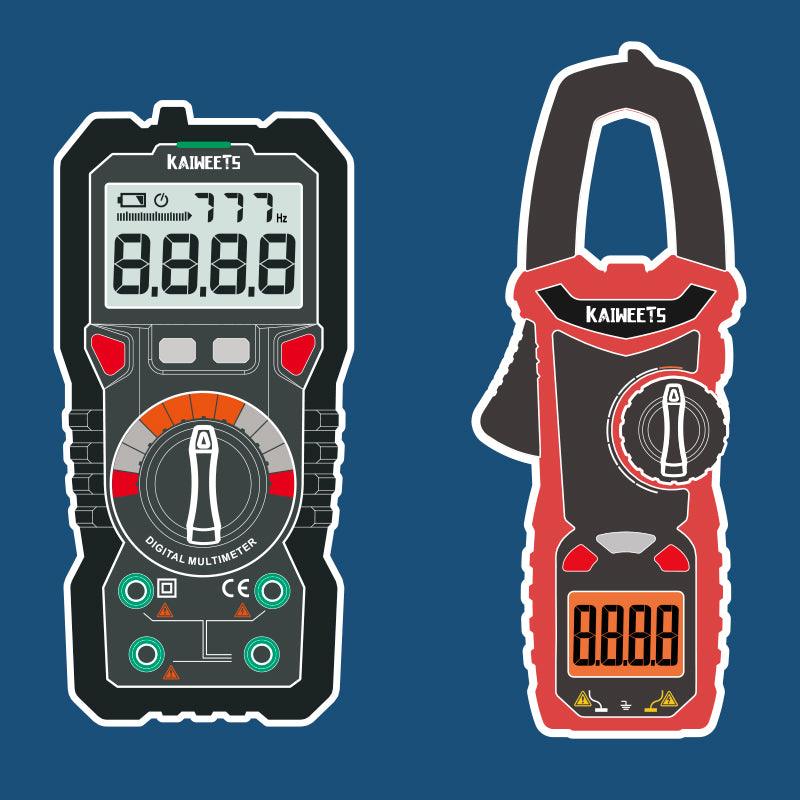
A multimeter is usually the better all-purpose tool for measuring voltage, resistance, and continuity. A clamp meter is usually the better choice when you need to measure current without disconnecting the circuit.
Modern versions of these tools often share several functions, so the difference is not simply what they can measure. The more important question is how they take the measurement and which type of electrical work they are designed to handle.
This guide compares clamp meters and multimeters by measurement method, accuracy, safety, and common applications so you can choose the right tool for your work.
Clamp Meter vs. Multimeter at a Glance
A multimeter is primarily a general-purpose circuit testing tool, while a clamp meter is primarily a current measurement tool.
| Comparison | Multimeter | Clamp Meter |
|---|---|---|
| Primary purpose | General electrical testing | Current measurement |
| How it measures current | Connected in series with the circuit | Clamped around one conductor |
| Circuit interruption | Usually required for current testing | Usually not required |
| Low-current measurement | Often provides better resolution | Depends heavily on the model |
| Higher-current measurement | Limited by the input and fuse rating | Usually more convenient |
| Voltage and resistance | Core functions | Available on many models |
| Best suited for | Detailed circuit diagnosis | Load-current testing |
Neither tool is automatically better. The right choice depends on the type of measurement you need and the circuit you are working on.
What Is the Main Difference Between a Clamp Meter and a Multimeter?
The main difference is how they measure current. A multimeter normally becomes part of the circuit, while a clamp meter detects the magnetic field around a conductor.
How a multimeter is designed
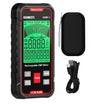
A multimeter combines several electrical measurements in one instrument. Most digital multimeters measure AC and DC voltage, resistance, continuity, and current.
Depending on the model, a multimeter may also measure capacitance or frequency. Some models include diode testing and temperature measurement.

A multimeter is especially useful when you need an exact numerical reading or want to inspect several parts of a circuit. It is commonly used for battery testing, wiring diagnosis, and electronic repair.
How a clamp meter is designed
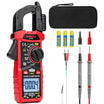
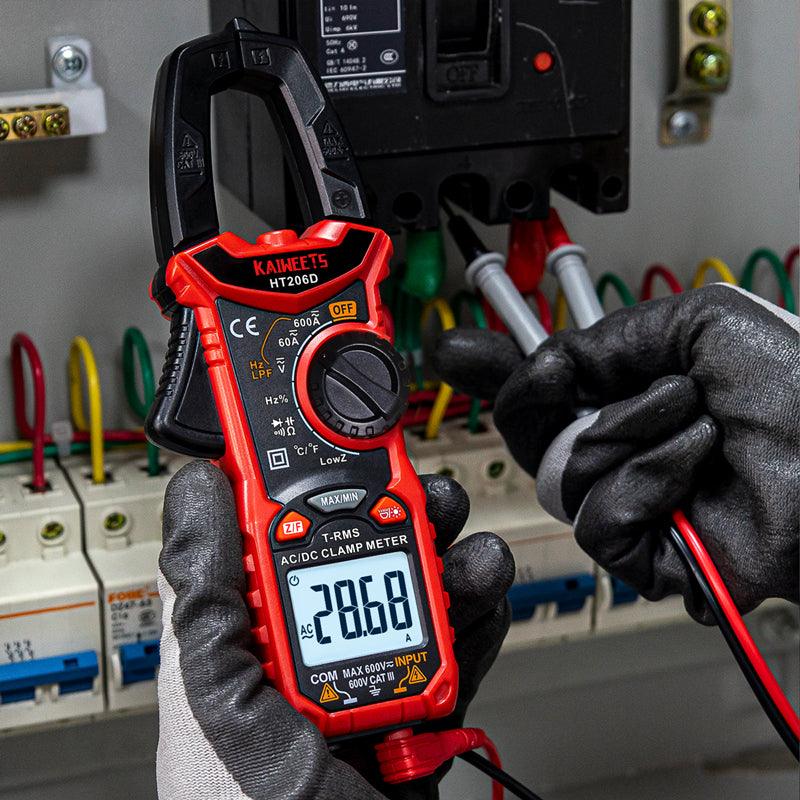
A clamp meter has hinged jaws that close around an electrical conductor. The current flowing through the conductor creates a magnetic field, which the meter converts into a current reading.
This design allows the user to measure current without cutting the wire or inserting the meter directly into the current path.

Many clamp meters also have test-lead inputs for voltage and resistance. However, current measurement remains their main advantage.
For a more detailed explanation of the jaws, sensors, and current detection method, see what a clamp meter is and how it works.
What Can a Multimeter and Clamp Meter Measure?
Both tools may measure several of the same electrical values, but those shared functions do not always have the same range or resolution.
| Measurement | Multimeter | Clamp Meter |
|---|---|---|
| AC voltage | Standard function | Common on models with test leads |
| DC voltage | Standard function | Common on models with test leads |
| Resistance | Standard function | Available on many models |
| Continuity | Standard function | Available on many models |
| Low current | Usually measured through the input jacks | Requires suitable clamp resolution |
| Higher current | Restricted by meter specifications | A core use of the clamp jaws |
| DC current through the clamp | Not applicable | Only on DC-capable models |
| Diode testing | Common | Model-dependent |
| Capacitance | Common on modern models | Model-dependent |
Do not assume that every clamp meter can measure DC current. Many basic models measure only AC current through the jaws.
The same rule applies to additional functions. Always compare the listed ranges, resolution, and accuracy rather than relying only on the function names.
How Is Current Measurement Different?
A multimeter measures current through its test leads, while a clamp meter measures current by surrounding one conductor with its jaws.
Measuring current with a multimeter
To measure current with a standard multimeter, the circuit normally has to be opened. The meter is then connected in series so the current flows through its internal current-measurement circuit.
This method can provide good resolution, especially in low-current electronic circuits. However, the measurement is limited by the meter’s current range, input jack, and internal fuse.
Incorrectly placing the probes across a power source while the meter is set to current mode can create a short circuit. Beginners should practice current measurement only on suitable low-voltage circuits.
The full setup is explained in this beginner guide on how to use a multimeter.
Measuring current with a clamp meter
A clamp meter normally measures current without opening the circuit. The jaws are placed around one insulated conductor while the circuit is operating.
The conductor must usually be separated from the other conductors in the cable. Clamping around both the outgoing and returning conductors can cause their magnetic fields to cancel, resulting in a reading near zero.
For complete operating instructions, see how to measure amps with a clamp meter.
Which Is More Accurate: a Clamp Meter or a Multimeter?
Neither tool is always more accurate. Accuracy depends on the meter, measurement range, signal type, and test conditions.
A digital multimeter often provides finer resolution for voltage, resistance, and low-current measurements. This makes it a better fit for many electronic circuits and detailed diagnostic tests.
A general-purpose clamp meter may not respond well to very small current changes. Its strength is convenient current measurement without rewiring the circuit.
Specialized leakage clamp meters can measure much smaller currents than ordinary load-current clamps. They should not be confused with general-purpose clamp meters designed for larger loads.
For either tool, compare these specifications:
- Measurement range: The minimum and maximum value the meter can measure.
- Resolution: The smallest change the display can show.
- Accuracy: The permitted difference between the displayed reading and the actual value.
A higher maximum range does not automatically mean better performance at low values.
Is a Clamp Meter Safer Than a Multimeter?
A clamp meter can reduce some risks during current measurement because it does not normally need to be connected in series with the circuit.
This avoids moving the test lead into a current jack and opening the circuit to insert the meter. It also reduces the chance of accidentally placing a current-configured meter across a voltage source.
However, using a clamp meter near energized equipment is not automatically safe. Opening an electrical panel or reaching near exposed conductors can still create serious shock and arc-flash hazards.
Whichever tool you use:
- Inspect the meter and test leads before testing.
- Use a meter with the correct CAT and voltage rating.
- Stay within the specified measurement range.
- Do not work on exposed mains wiring without appropriate training.
A voltage tester may be more convenient when the only goal is checking whether voltage is present. A multimeter is more appropriate when you need an actual voltage value.
Which Meter Is Better for Different Jobs?
A multimeter is generally better for detailed circuit checks, while a clamp meter is better for monitoring the current drawn by operating equipment.
Home electrical and DIY work
A multimeter is usually the more practical first tool for a homeowner. It can check batteries, test continuity, and measure voltage in suitable circuits.
A clamp meter becomes useful when you need to see how much current an appliance or branch circuit is drawing. Accessing conductors inside a live electrical panel should be left to a qualified person.
Automotive electrical work
A multimeter is useful for battery voltage, wiring continuity, and sensor testing. Its finer resolution can also help with low-voltage diagnostic work.
A DC-capable clamp meter is useful for checking current draw without disconnecting a cable. This can help when testing accessories or looking for abnormal battery drain, provided the clamp has enough low-current resolution.
HVAC and motor troubleshooting
A clamp meter is often more convenient for measuring motor or compressor running current. Models with an inrush function can also capture starting current.
A multimeter remains useful for voltage and resistance checks. Technicians may use both tools because voltage and current often need to be evaluated together.
Electronics and component testing
A multimeter is usually the better choice for electronics. It can provide finer readings for low voltage and resistance.
Diode mode and low-current ranges are also more common on multimeters. A standard clamp meter may not detect the small current flowing through many electronic circuits.
Industrial electrical maintenance
A clamp meter is well suited to load-current checks and phase comparisons. It allows technicians to collect current readings without repeatedly opening conductors.
A separate multimeter may still be needed for control voltage and detailed resistance measurements. Advanced troubleshooting often requires more than one electrical value.
Can a Clamp Meter Replace a Multimeter?
A clamp meter can replace a multimeter for some routine measurements, but it cannot replace one in every situation.
Many modern clamp meters measure voltage, resistance, and continuity through test leads. For basic electrical maintenance, this may provide enough functionality in one tool.
A dedicated multimeter remains the better choice when you need:
- Fine low-current resolution
- Detailed electronics testing
- Broader resistance ranges
- Diode or component-level diagnosis
A clamp meter remains the better choice when the main task is measuring load current without interrupting the circuit.
Do Electricians Need Both a Clamp Meter and a Multimeter?
Many electricians and maintenance technicians benefit from carrying both tools because they solve different measurement problems.
The clamp meter can remain around a conductor while the multimeter checks voltage at another point. This makes it easier to compare electrical load with supply conditions.

A single full-featured clamp meter may be enough for basic field work. More detailed troubleshooting may still require a separate multimeter with better resolution.
Should You Buy a Clamp Meter or a Multimeter?
Buy a multimeter first if you need a versatile tool for everyday testing. Buy a clamp meter first if current measurement is your main priority.
Choose a multimeter if:
- You mainly test voltage, continuity, or resistance.
- You work with batteries or low-voltage electronics.
- You need finer low-current measurements.
- You are buying your first general electrical tester.
Choose a clamp meter if:
- You frequently measure equipment load current.
- You do not want to disconnect the conductor.
- You work with motors or HVAC equipment.
- You need a higher current range than a multimeter provides.
Choose both if:
- You perform professional electrical maintenance.
- You need to compare current and voltage readings.
- You work across both electrical and electronic systems.
Before choosing a model, check whether you need AC current only or both AC and DC current. Also compare the jaw opening, measurement range, resolution, and safety rating.
Frequently Asked Questions
Is a clamp meter the same as a multimeter?
No. A clamp meter is designed primarily for measuring current through its jaws. A multimeter is designed primarily for general electrical measurements through test leads.
Many clamp meters include multimeter functions, which is why the two tools can appear similar.
Can a clamp meter measure voltage?
Many clamp meters can measure voltage through their test leads. The jaws measure current rather than voltage.
Some current-only clamp instruments do not include voltage measurement, so check the specifications before purchasing.
Can a multimeter measure the same current as a clamp meter?
A multimeter can measure current only within the limits of its current input and internal protection. It normally has to be connected in series with the circuit.
A clamp meter is generally more convenient for higher load current because the conductor does not need to be disconnected.
Which meter is better for beginners?
A multimeter is usually the better first tool for beginners because it supports a wider range of basic tests. Beginners should start with batteries and other low-voltage circuits.
A clamp meter may be the better first choice when the user specifically needs to measure appliance or equipment current.
Can a clamp meter measure small current?
It depends on the meter’s minimum range and resolution. A general-purpose clamp meter may not provide stable readings for very small current.
Low-current testing may require a leakage clamp meter or a multimeter connected in series.
Which meter is better for automotive work?
A multimeter is better for most battery voltage, continuity, and sensor checks. A DC clamp meter is better when you need to measure current without disconnecting the cable.
Many automotive technicians use both because the two tools answer different diagnostic questions.
Which meter is better for electricians?
A clamp meter is often the more convenient tool for field current measurements. A multimeter remains important for detailed voltage and resistance testing.
Electricians who perform broad troubleshooting will usually benefit from having both.
Conclusion
A multimeter is the better general-purpose tester for voltage, resistance, continuity, and detailed circuit diagnosis. It also provides better resolution for many low-current applications.
A clamp meter is the better tool for measuring load current without opening the circuit. It is especially useful for motors, HVAC systems, and electrical maintenance.
The two tools overlap, but they are optimized for different jobs. Choose a multimeter when versatility and fine measurement are the priority. Choose a clamp meter when convenient current measurement matters most.


Leave a comment
All comments are moderated before being published.
This site is protected by hCaptcha and the hCaptcha Privacy Policy and Terms of Service apply.