















A DC power supply provides direct current to an electronic device, circuit, or test project. It may convert AC from a wall outlet into DC, or it may supply DC from a battery or another stored-energy source.
For most users, the goal is simple: match the voltage, supply enough current, and avoid damaging the device. A DC power supply that is set too high can damage electronics quickly. A supply with poor current control can also overheat wires or components during a short circuit.

What Is a DC Power Supply?
A DC power supply is a device that delivers direct current at a fixed or adjustable voltage. Direct current flows in one direction, which is why it is used by many electronic circuits, batteries, LED strips, sensors, and control boards.
Many everyday adapters are fixed-output DC power supplies. For example, a laptop charger or router adapter converts AC power from the wall into a specific DC output. A bench DC power supply is more flexible because you can adjust the voltage and often set a current limit.
How Does a DC Power Supply Work?
A DC power supply takes an input energy source and regulates it into a usable DC output. In an AC-to-DC supply, the input is first converted from AC to DC, then filtered and regulated so the output remains stable enough for the connected device.
Adjustable bench power supplies usually work in two main modes:
- Constant Voltage (CV): The supply holds the set voltage while the circuit draws the current it needs, up to the current limit.
- Constant Current (CC): The supply limits current to the set value and adjusts voltage as needed to protect the load.
For basic electronics testing, CV mode is the most common. The current limit is still important because it helps protect the circuit if something is connected incorrectly.
What Are the Main Types of DC Power Supplies?
The main types of DC power supplies include linear power supplies, switched-mode power supplies, battery-powered supplies, and adjustable bench supplies. Each type has a different balance of noise, size, efficiency, and cost.
Linear Power Supplies
A linear power supply regulates voltage in a simple and low-noise way. This makes it useful for sensitive analog circuits or audio-related testing where electrical noise matters.
The tradeoff is heat. Linear supplies are usually larger and less efficient than switching supplies, especially when the voltage drop between input and output is high.
Switched-Mode Power Supplies
A switched-mode power supply, often called an SMPS, regulates output by switching electronic components on and off at high speed. This design is usually smaller, lighter, and more efficient than a linear supply.
The main limitation is electrical noise. A good switching supply can still be very stable, but sensitive projects may need extra filtering or a lower-noise supply.
Battery-Powered DC Supplies
A battery-powered supply provides DC power without needing a wall outlet. It is useful for portable equipment, field testing, and low-voltage projects.
The output depends on battery chemistry, charge level, and load current. Some battery systems also require protection circuits to prevent over-discharge, overcurrent, or reverse polarity problems.
Adjustable Bench DC Power Supplies
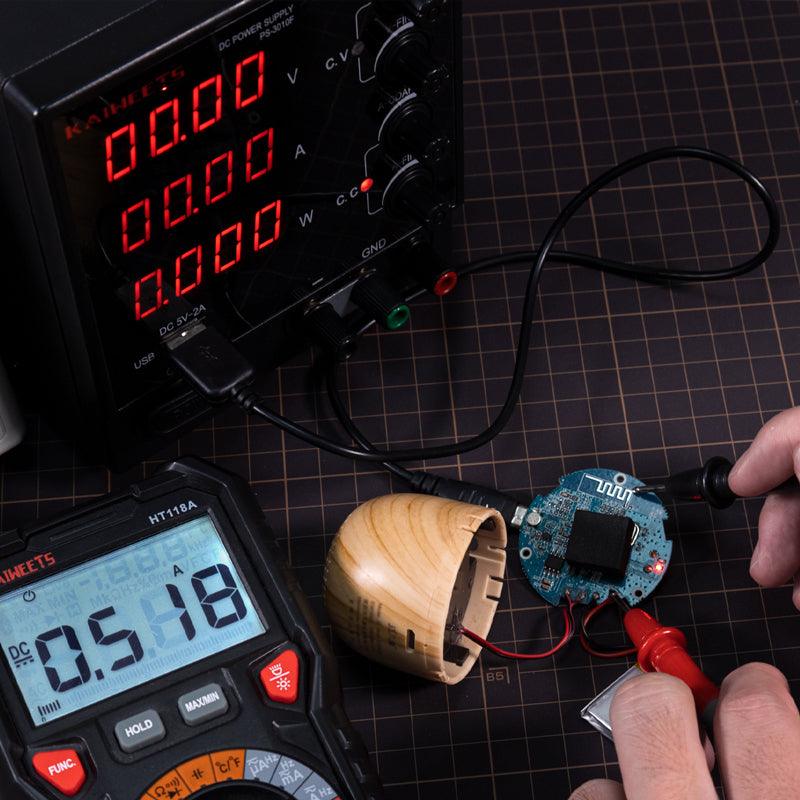
An adjustable bench DC power supply is designed for testing and development. It lets you set the output voltage and usually lets you set a current limit before powering a circuit.
This is the most practical choice for electronics repair, prototyping, and troubleshooting because you can start with a low voltage and increase it carefully.
How Do You Choose the Right DC Power Supply?
Choose a DC power supply by matching the required voltage, current, connector type, polarity, and safety rating of the device you want to power. Do not choose by voltage alone.
| What to Check | Why It Matters |
|---|---|
| Output voltage | The voltage must match the device requirement. Too much voltage can damage the circuit. |
| Current rating | The supply should provide at least the current the device needs. The device only draws what it requires. |
| Polarity | Reversed positive and negative connections can damage many DC devices. |
| Ripple and noise | Sensitive circuits may need a cleaner output than basic loads. |
| Protection features | Current limiting, short-circuit protection, and overvoltage protection reduce risk during faults. |
| Safety certification | For AC-powered supplies, look for recognized safety marks and use the supply only as rated. |
If you are replacing a lost adapter, read the label on the original power supply or the device. Match the voltage exactly, confirm the polarity, and choose a current rating that is equal to or higher than the original adapter.
How Do You Use a DC Power Supply Safely?
Use a DC power supply by setting the voltage and current limit before connecting the load. This is especially important when powering an unknown or newly repaired circuit.

Step 1: Check the device requirements
Read the voltage, current, and polarity requirements before connecting power. If the device label says 12V DC, do not connect a higher-voltage supply unless the manufacturer clearly allows it.
Step 2: Set the voltage before connecting the load
Turn the voltage control to the required value while the load is disconnected. If you are testing a new circuit, start lower than the expected operating voltage and increase slowly.
Step 3: Set a safe current limit
Set the current limit close to the expected current draw. If you are not sure, start low and raise it only after confirming the circuit behaves normally.
Step 4: Connect positive and negative correctly
Connect the positive output to the positive input of the device and the negative output to ground or negative. Double-check polarity before turning on the output.
Step 5: Watch the voltage and current readings
After turning on the supply, check whether the current is normal. If the supply immediately enters current-limit mode, turn it off and inspect the circuit for a short, reversed polarity, or wrong voltage setting.
Step 6: Turn off the output before disconnecting
When the test is finished, turn off the power supply output before removing the leads. This reduces the chance of sparks, accidental shorts, or loose-lead contact.
What Safety Features Should a DC Power Supply Have?
A good DC power supply should include protection features that reduce damage during incorrect setup or circuit faults. Current limiting is one of the most useful features for electronics work.
- Current limiting: Helps prevent excessive current during a short or circuit fault.
- Overvoltage protection: Helps stop the output from rising above a safe level.
- Short-circuit protection: Reduces damage if the output terminals are accidentally shorted.
- Overtemperature protection: Shuts down or limits operation when the supply becomes too hot.
- Clear output display: Lets you see voltage and current while testing.
For an AC-powered supply, do not open the case unless you are qualified to service electrical equipment. Internal capacitors and mains-connected parts can remain hazardous even after the unit is unplugged.
Does DC Voltage Drop With Distance?
Yes, DC voltage drops with distance because wires have resistance. The longer the wire and the higher the current, the more voltage is lost before the power reaches the load.
Voltage drop also depends on wire size and conductor material. A thicker copper wire usually has less resistance than a thinner wire of the same length.
For low-voltage DC systems, voltage drop can become noticeable quickly. A small drop may cause LEDs to dim, motors to run weakly, or control boards to behave unpredictably. If the cable run is long, choose the wire gauge based on current, distance, and the acceptable voltage drop for the device.
Can You Use AC Wire for DC?
You can use a wire for DC only if its voltage rating, current capacity, insulation type, temperature rating, and installation environment are suitable. The label “AC wire” by itself is not enough information.
The conductor does not know whether the current is AC or DC, but the application still matters. A wire used inside a small electronics project is not the same as a cable used in a building, vehicle, solar setup, or outdoor installation.
For high-current DC, long cable runs, or permanent wiring, follow the relevant electrical code and use properly rated cable. If the wiring connects to mains power or building wiring, use a qualified electrician.
What Kind of Wire Is Used for Direct Current?
Copper wire is the most common choice for direct current projects because it has good conductivity and is easy to work with. The correct size depends on current, distance, insulation rating, and the environment.
For small electronics, stranded copper wire is often easier to route and connect. For higher-current systems, wire gauge becomes more important because undersized wire can heat up or cause too much voltage drop.
Aluminum wire is used in some power applications, but it requires correct terminals and installation practices. Do not substitute wire materials casually, especially in permanent or high-current installations.
What Is the Difference Between a DC Power Supply and a Charger?
A DC power supply provides a regulated DC output, while a charger is designed to charge a specific battery chemistry. A charger usually controls charging stages, current, voltage limits, and cutoff behavior.
Do not use a basic DC power supply as a battery charger unless you understand the battery requirements and the supply can be set safely. Lithium, lead-acid, and NiMH batteries require different charging methods.
Can a DC Power Supply Output AC?
A normal DC power supply does not output AC. It is designed to provide direct current.
If a device converts DC into AC, it is usually called an inverter. Some advanced lab equipment can generate different waveforms, but that is not the same as a standard DC power supply.
Frequently Asked Questions
What does DC stand for?
DC stands for direct current. In a DC circuit, current flows in one direction.
What is a DC power supply used for?
A DC power supply is used to power electronic devices, test circuits, charge certain systems when designed for that purpose, or provide a stable voltage during troubleshooting.
Is a battery a DC power supply?
Yes, a battery is a DC power source. However, its voltage changes as it discharges, so some devices need a regulator to keep the output stable.
What happens if the current rating is too high?
A higher current rating is usually fine if the voltage and polarity are correct. The device draws the current it needs. The danger is using the wrong voltage, reversed polarity, or an unsafe power supply.
What happens if the current rating is too low?
If the current rating is too low, the power supply may overheat, shut down, drop voltage, or fail to power the device properly.
Should I choose a linear or switching DC power supply?
Choose a linear supply when low noise is more important than size or efficiency. Choose a switching supply when you need a smaller, lighter, and more efficient option.
Conclusion
A DC power supply is one of the most useful tools for electronics work, but it must be chosen and used carefully. The most important checks are voltage, current, polarity, protection features, and safety rating.
For everyday devices, a fixed AC-to-DC adapter may be enough. For repair, testing, and prototyping, an adjustable bench DC power supply gives you more control. Set the current limit first, confirm polarity, and increase voltage carefully when testing an unknown circuit.
If the project involves high current, batteries, vehicle wiring, solar wiring, or building wiring, do not rely on guesswork. Use properly rated parts and follow the applicable safety requirements for the installation.


Leave a comment
All comments are moderated before being published.
This site is protected by hCaptcha and the hCaptcha Privacy Policy and Terms of Service apply.