

When you use a multimeter regularly, the test leads can make more of a difference than you might expect. They affect how easily you can reach a test point, how comfortably you can work in different temperatures, and how well your equipment holds up over time.
One detail worth paying attention to is the insulation material. Most multimeter test leads use either PVC or silicone insulation. Both are designed to protect the conductive wire inside, but they behave differently in everyday working conditions.
So, PVC vs. silicone test leads: Which is better?
The short answer is that PVC leads are a practical choice for general-purpose testing, while silicone leads are usually more suitable for demanding environments where flexibility and temperature resistance matter. However, the right choice depends on how and where you use your multimeter.
Let's look at the differences and what they mean in practice.
What Are PVC and Silicone Test Leads?
Before comparing the two, it helps to understand what these materials actually do.
A multimeter test lead consists of a conductive wire, insulation around the wire, connectors, and a probe at the end. The insulation prevents direct contact with the conductor and helps protect the user during electrical measurements.
PVC and silicone are two commonly used insulation materials.
PVC Test Leads
PVC (polyvinyl chloride) is a widely used plastic material found in electrical cables, wire insulation, and many other products.
PVC-insulated test leads are common with standard multimeters because they offer a practical balance of insulation performance, durability, and cost.
They work well for everyday measurements, such as checking household batteries, testing continuity, measuring resistance, and troubleshooting basic electrical circuits.
The main limitation is that PVC can become stiff in cold temperatures. Depending on the formulation, it may also soften or degrade when exposed to excessive heat.
For occasional testing in a relatively stable indoor environment, these limitations may not be a major concern.
Silicone Test Leads
Silicone-insulated test leads use a flexible silicone rubber material around the conductive wire.
Unlike conventional PVC insulation, silicone generally maintains its flexibility across a wider temperature range. This makes it easier to handle in cold conditions and more suitable for applications where the leads may encounter heat.
Silicone leads also tend to feel softer and more flexible. They are easier to position around equipment, and they generally resist taking on the tight coils that can make test leads inconvenient to use.
These characteristics make silicone leads a popular upgrade for electricians, technicians, and people who use their multimeters frequently.
PVC vs. Silicone Test Leads: Key Differences
The biggest differences between PVC and silicone test leads come down to flexibility, temperature resistance, durability, and price.
| Feature | PVC Test Leads | Silicone Test Leads |
|---|---|---|
| Flexibility | Relatively stiff | Softer and more flexible |
| Cold-weather performance | Can become stiff | Generally stays flexible |
| Heat resistance | More limited | Generally higher |
| Handling | Can retain bends and coils | Easier to position and manage |
| General durability | Good for everyday use | Good, but the soft jacket can be more vulnerable to some sharp-edge damage |
| Price | Usually more affordable | Usually more expensive |
| Best for | General indoor testing | Frequent use and demanding environments |
1. Flexibility and Ease of Handling
Flexibility is one of the most noticeable differences between PVC and silicone test leads.
PVC leads tend to be stiffer, particularly when they have been stored in a coiled position for a long time. When you take them out of your toolbox, they may retain their bends instead of lying flat.
This can become frustrating when you're trying to reach a test point in a tight space. You may need to reposition the leads several times before the probes stay where you want them.
Silicone leads are generally softer and more flexible. They bend more easily, follow the direction you guide them, and are less likely to fight against your movements.
For example, imagine testing a connection inside a crowded electrical control box. You need one probe to stay on a terminal while positioning the other on a nearby contact. More flexible leads can make this process easier.
If you use your multimeter occasionally on a workbench, the difference may not matter much. But if you spend hours testing different components, the easier handling of silicone leads can make a noticeable difference.
2. Temperature Resistance
Temperature is another important consideration.
PVC insulation can become stiff in cold environments and may soften or melt when exposed to excessive heat. Its actual temperature limits depend on the specific PVC formulation and product design.
Silicone insulation generally performs better across a wider temperature range. It maintains flexibility in cold conditions and offers better resistance to heat.
This matters in several situations:
- Outdoor electrical work: Test leads may become difficult to position when you're working in cold weather.
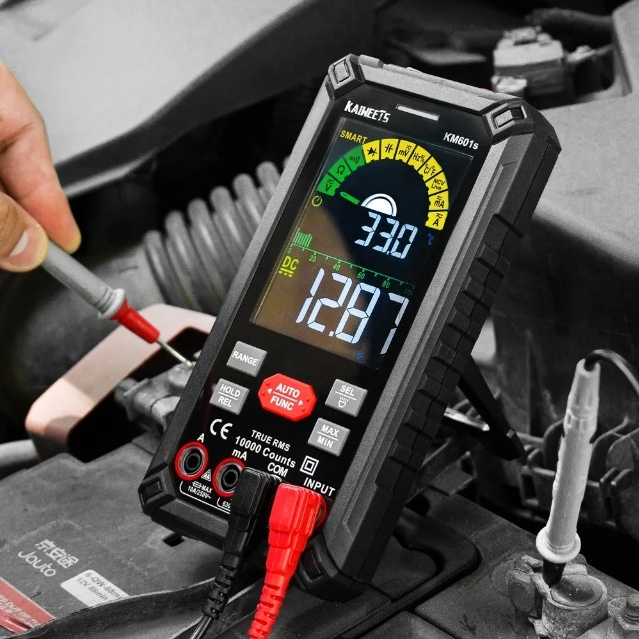
- Automotive repair: You may need to route leads around engine components or work in an environment with changing temperatures.
- Electronics repair: A soldering station or other heat-producing equipment may be nearby.
- Industrial maintenance: Equipment rooms and machinery areas may expose tools to higher temperatures.
Keep in mind that heat-resistant insulation does not make a test lead safe to touch hot surfaces or use beyond its specified operating temperature. Always check the manufacturer's temperature rating.
3. Durability and Wear Resistance
Both PVC and silicone test leads can last a long time when properly manufactured and maintained. However, they respond differently to physical wear.
PVC has a relatively firm outer surface that works well for general handling. It can withstand everyday contact with work surfaces and equipment, although repeated bending, aging, and temperature exposure can eventually cause it to become brittle or crack.
Silicone is more flexible and generally handles repeated bending well. However, its softer surface can be more susceptible to cuts or damage from sharp edges.
This is an important distinction: softer does not automatically mean more durable in every situation.
The quality of the wire inside also matters. A lead with more fine copper strands may bend more easily than one with fewer, thicker strands. Strain relief at the probe and connector ends also plays a role in how well the lead withstands repeated use.
Regardless of the material, inspect your leads regularly. Replace them if you notice cracked insulation, exposed wire, damaged connectors, or loose connections.
4. Price and Value
PVC test leads are generally less expensive than silicone alternatives.
If you only use a multimeter occasionally for basic household checks or simple DIY projects, standard PVC leads may be all you need.
Silicone leads usually cost more, but the additional flexibility and temperature resistance can make the upgrade worthwhile if you use your meter regularly.
Rather than looking at the initial purchase price alone, consider how often you use your leads and the conditions they need to withstand.
If you frequently work in cold environments, move between different test points, or handle delicate electronic components, paying more for comfortable, flexible leads may be a reasonable investment.
Which Test Leads Should You Choose?
There isn't one material that works best for everyone. The right choice depends on your working environment and how frequently you use your multimeter.
Choose PVC Test Leads If:
- You mainly perform basic electrical measurements indoors.
- You use your multimeter occasionally.
- You work in relatively stable temperatures.
- You want an affordable replacement for standard test leads.
- You don't need to move the leads around frequently in tight spaces.
For basic continuity checks, battery testing, and general troubleshooting, quality PVC leads can do the job perfectly well.
Choose Silicone Test Leads If:
- You regularly use a multimeter for electrical troubleshooting.
- You work outdoors or in cold environments.
- You need flexible leads for testing components in confined spaces.
- You work around equipment that produces heat.
- You want leads that are easier to handle during frequent measurements.
For professional electricians, automotive technicians, and electronics repair enthusiasts, silicone leads are often the more convenient option.
Ultimately, if you use your multimeter every day, the extra flexibility of silicone leads can make your work more comfortable.
What Else Should You Check When Buying Multimeter Test Leads?
The insulation material is important, but it shouldn't be the only factor in your decision.
Two test lead sets made from the same material can have very different performance and safety characteristics. Before buying a replacement or upgrade, pay attention to the following specifications.
1. CAT Safety Rating and Voltage Rating
This is one of the most important things to check.
Electrical measurement categories (CAT ratings) indicate the types of electrical environments in which a test lead is designed to be used.
The main categories are:
- CAT I: Protected electronic circuits and circuits with limited transient energy.
- CAT II: Equipment connected to a local power supply, such as household appliances and portable tools.
- CAT III: Fixed installations, including distribution panels and building wiring.
- CAT IV: The origin of the electrical installation, such as the utility supply connection and service entrance.
A higher CAT category generally indicates suitability for environments with greater transient energy. However, you must also consider the voltage rating within that category.
For example, CAT III 1000V and CAT IV 600V are not interchangeable ratings. Both the measurement environment and the voltage level must be appropriate for the equipment.
Always check the ratings printed on the test leads and make sure they are compatible with your multimeter and intended application.
2. Probe Tip Design
Different measurements require different probe tip designs.
A sharp, narrow probe can help you reach small test points on circuit boards and electronic components. A thicker probe may be more suitable for general electrical testing where a more robust contact is needed.
Some test leads also have removable protective caps or adjustable probe tips, allowing you to adapt the exposed metal length to different applications.
Choose a design that matches the type of components you usually test.
3. Wire Length and Flexibility
Standard multimeter test leads are often around 1 meter to 1.2 meters long, although other lengths are available.
Longer leads provide more room to move around larger equipment, while shorter leads can be easier to manage on a workbench.
Also, don't assume that silicone insulation alone guarantees excellent flexibility. The number and thickness of copper strands inside the wire, along with the overall cable construction, affect how easily it bends.
4. Connector Compatibility
Most standard digital multimeters use 4 mm banana plug connections, but you should still check before purchasing replacement leads.
Pay attention to whether the connectors are shrouded, whether they fit your meter's input terminals, and whether the test leads support the accessories you need.
If you regularly use alligator clips, hook probes, or other adapters, check that the lead design is compatible with those accessories.
5. Overall Construction and Safety
Good test leads should have secure connections, properly insulated connectors, suitable strain relief, and clear safety markings.
Look for products that comply with the relevant electrical safety standards, such as IEC 61010-031, and have appropriate third-party certification where applicable.
Remember that insulation material alone does not determine electrical safety. A well-designed PVC test lead with the correct ratings can be safer for a particular application than a poorly made silicone lead with inadequate ratings.
Silicone Test Leads from KAIWEETS
If you're considering an upgrade from standard PVC leads, KAIWEETS offers two silicone test lead options for different testing needs.
KAIWEETS KET05 Multimeter Test Leads Kit
The KET05 is a 23-piece test lead kit with silicone-insulated leads and a range of interchangeable accessories, including test probes, tweezers, and alligator clips. It's a practical option if you need more than a basic pair of multimeter leads.
KAIWEETS KET20 Silicone Multimeter Test Leads
The KET20 is a straightforward replacement lead set featuring flexible silicone insulation, 0.7 mm gold-plated probe tips, and a 120 cm cable. It is rated CAT III 1000V / CAT IV 600V and 20A, making it worth considering for compatible multimeters and applications within those ratings.
Frequently Asked Questions
1. Are silicone test leads better than PVC test leads?
Silicone test leads generally offer better flexibility and temperature resistance, making them a good choice for frequent use and demanding working environments.
PVC test leads are usually more affordable and work well for general-purpose electrical measurements.
Neither material is automatically safer than the other. Always check the electrical ratings and construction of the complete test lead.
2. Do silicone test leads melt?
Silicone insulation has better heat resistance than conventional PVC insulation and generally withstands higher temperatures.
However, silicone is not heatproof. It can still degrade when exposed to temperatures beyond its specified operating range. Always follow the manufacturer's temperature specifications.
3. Are PVC test leads safe to use?
Yes. Properly manufactured PVC test leads can be safe for electrical measurements when used within their specified voltage, current, and CAT ratings.
The material itself does not determine whether a test lead is safe. Its insulation design, construction, certification, and physical condition are equally important.
4. Can I replace PVC test leads with silicone test leads?
In most cases, yes, provided the replacement leads have compatible connectors and are rated appropriately for your multimeter and intended measurements.
Check the banana plug size, voltage rating, current rating, and CAT category before making the replacement.
5. How long do multimeter test leads last?
There is no fixed replacement interval for multimeter test leads. Their lifespan depends on material quality, frequency of use, storage conditions, and exposure to heat and mechanical damage.
Inspect the insulation, probe handles, connectors, and cable entry points before use. Replace damaged leads immediately rather than waiting for them to stop working.
6. Can I use silicone test leads with any multimeter?
Not necessarily. Many multimeters use standard 4 mm banana plug inputs, but compatibility should always be confirmed.
Check the connector design, input configuration, and electrical ratings of both the multimeter and replacement leads before use.
Final Thoughts
When comparing PVC vs. silicone test leads, the main question isn't which material is universally better. It's which one makes more sense for the way you work.
PVC leads are a sensible choice for occasional testing and general indoor applications. Silicone leads are worth considering if you need greater flexibility, work in changing temperatures, or use your multimeter frequently.
Whichever material you choose, don't overlook the details that matter most: proper CAT and voltage ratings, compatible connectors, sound construction, and good insulation condition.
A good set of test leads should do more than connect your multimeter to a circuit. It should make measurements easier while providing the protection your work requires.

Leave a comment
All comments are moderated before being published.
This site is protected by hCaptcha and the hCaptcha Privacy Policy and Terms of Service apply.